Research Highlights

Expanding the Capabilities of Lab-Based ARPES on Quantum Materials
May 1, 2023
Cornell University

Expanding the Capabilities of Lab-Based ARPES on Quantum Materials

B.D. Faeth, K.M. Shen, and D.G. Schlom (Cornell University) T.M. McQueen (Johns Hopkins University)
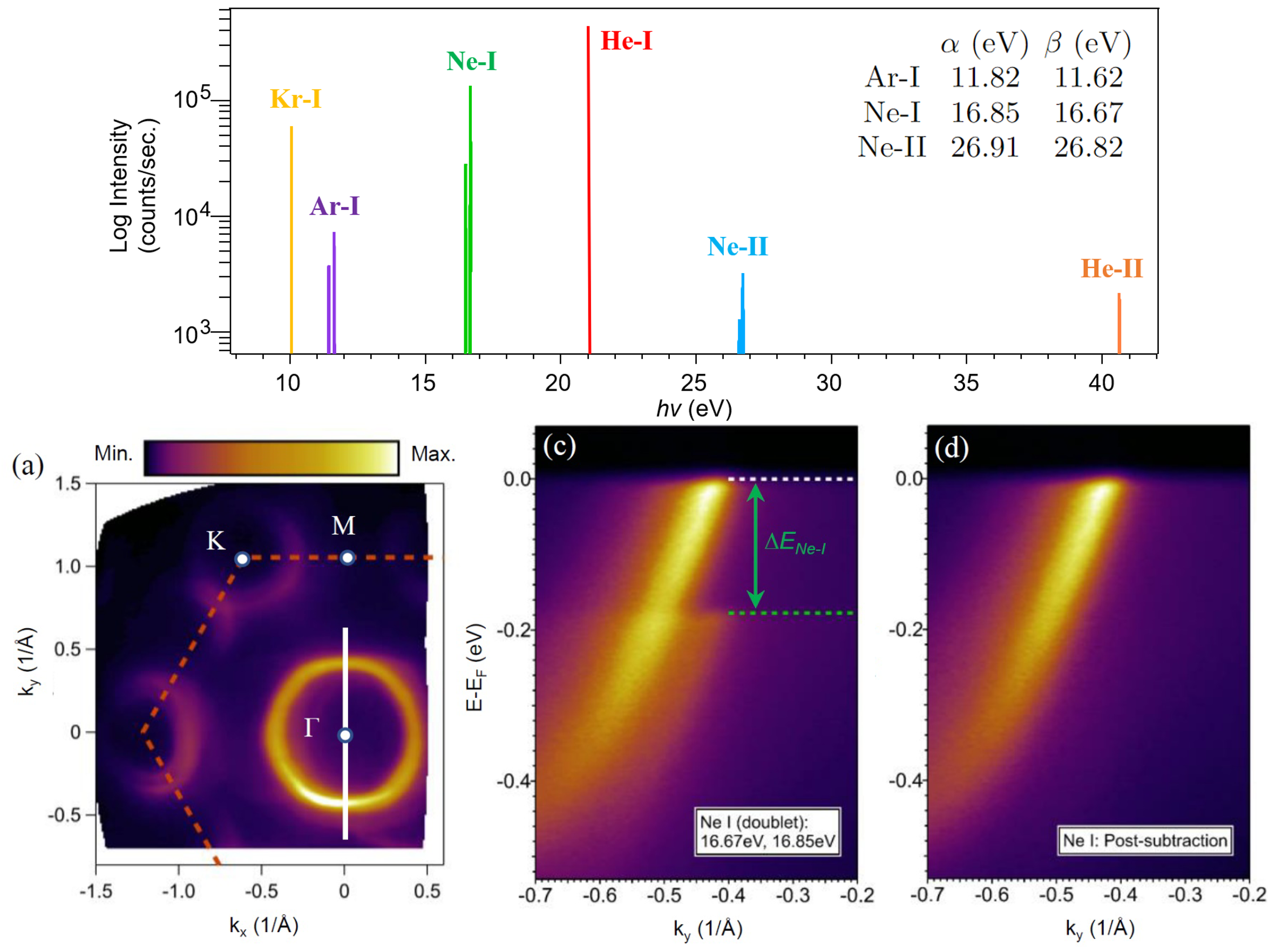
Here, PARADIM’s In-House Team developed a simple algorithmic method to separate the two components from ARPES spectra collected with doublet emission sources.
Topological Surface States in a Kondo Insulator
Apr 18, 2023
Cornell University

Topological Surface States in a Kondo Insulator

W.K. Park (NHMFL/FSU), W.A. Phelan (now LANL), T.M. McQueen and C.L. Broholm (JHU)
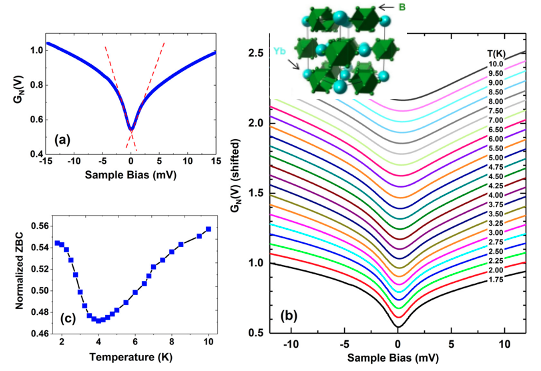
Topological Kondo Insulators offer a unique route to topological surface states with great potentials both for devices as well as to probe the fundamental physics of topology. The NHMFL team came to PARADIM to gain access to what is only the second known topological Kondo insulator, YbB12. Working with PARADIM trainee Lucas Pressley and PARADIM REU Julia Trowbridge, laser floating zone was successfully used to produce untwinned single crystals of YbB12, a very high, incongruently melting, boride, marking the first time this material was produced outside of Japan, and the first time with the laser FZ technique.
Suboxide Molecular-Beam Epitaxy—Translating a new Concept into β-Ga2O3 Transistors
Apr 3, 2023
Cornell University

Suboxide Molecular-Beam Epitaxy—Translating a new Concept into β-Ga2O3 Transistors

D.G. Schlom, H.P. Nair, M.O. Thompson, D.A. Muller, G.H. Xing, D. Jena (Cornell University)S. Mou, A.T. Neal, K. Chabak, A.J. Green (AFRL); M.D. Williams (CAU); Z.-K. Liu (Penn State)
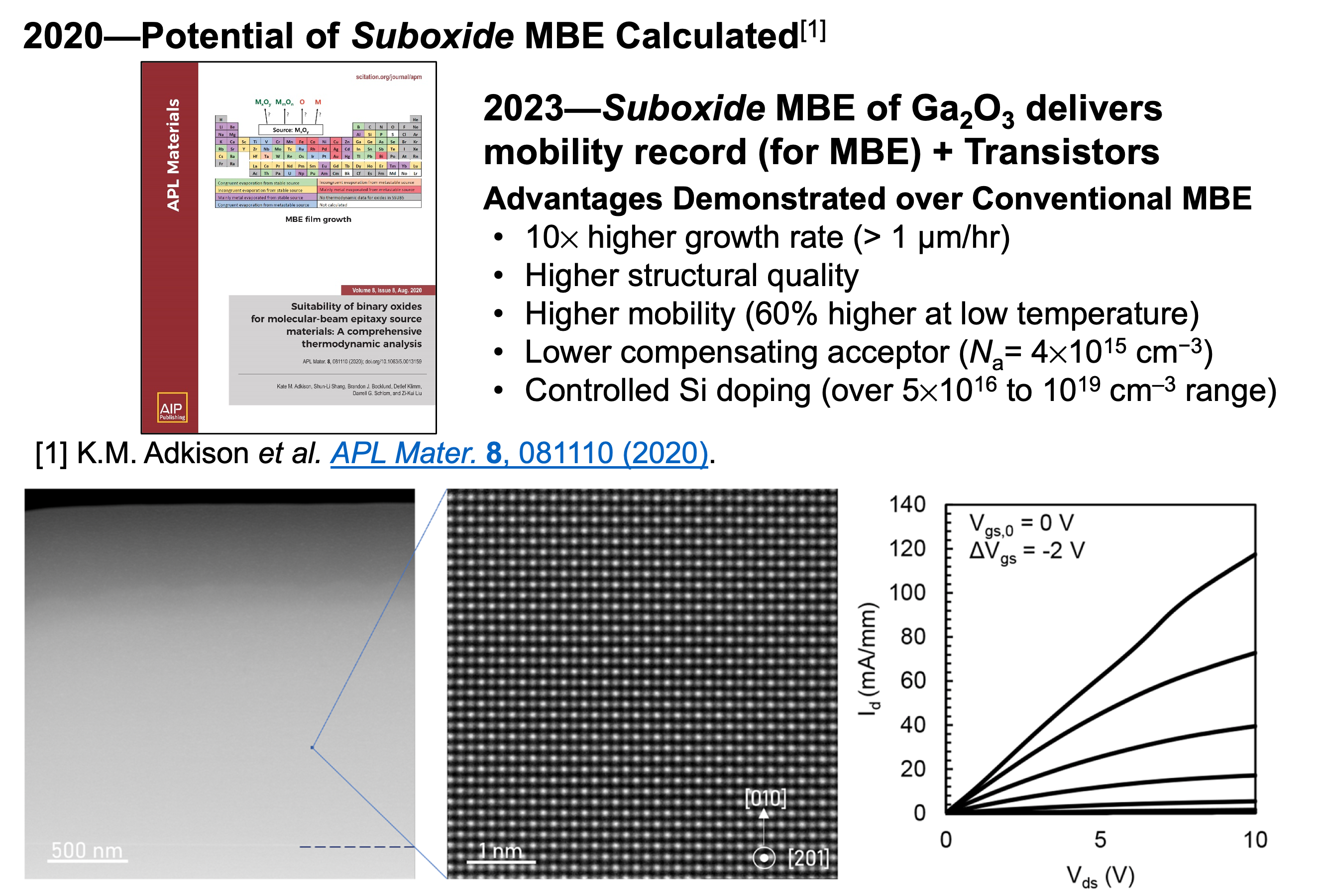
In 2020 PARADIM’s in-house team—working with collaborators at Penn State—developed (and patented) a new variant of molecular-beam epitaxy (MBE) called “suboxide MBE.” In contrast to conventional MBE where the molecular beams are elemental, in suboxide MBE the molecular beams are pre-oxidized. This method has since been widely applied by PARADIM users in 20 publications utilizing suboxide MBE + over 20 active user projects).
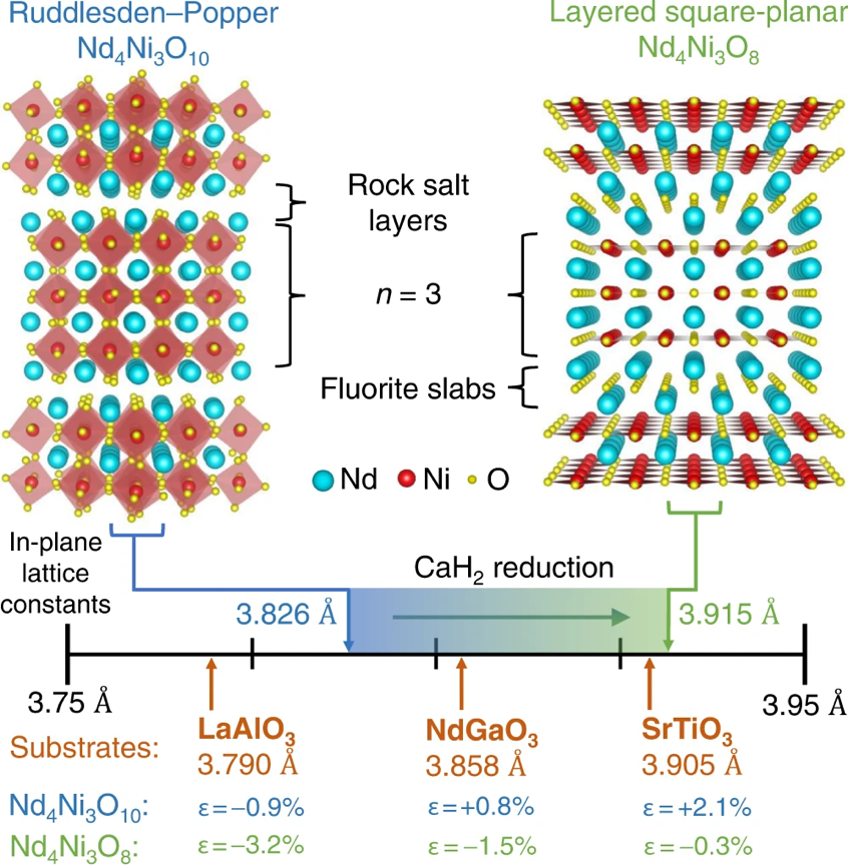
Figure 1: The nickelate superconductor Nd4Ni3O8 is metastable and synthesized by removing oxygen from the stable parent phase Nd4Ni3O10 at low temperature, where kinetics prevents decomposition. The number line shows the lattice parameters of Nd4Ni3O10, Nd4Ni3O8, and the substrates upon which Nd4Ni3O10 can be grown. Strain arises from growth as well as the Nd4Ni3O10 → Nd4Ni3O8 transformation. The mismatch between Nd4Ni3O10, Nd4Ni3O8, and the substrates are shown.
Gate-tunable heavy fermions in a moiré Kondo lattice
Mar 15, 2023
Cornell University

Gate-tunable heavy fermions in a moiré Kondo lattice

Kin Fai Mak and Jie Shan (Cornell University)
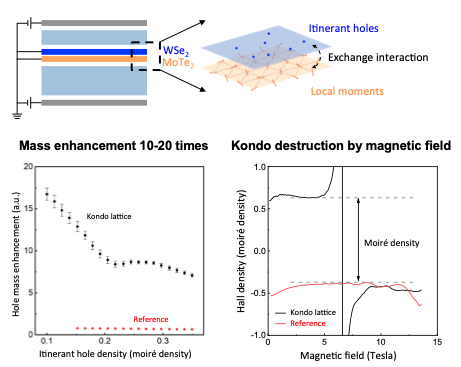
Here, members of PARADIM’s In-House Research Team demonstrate a model system created by stacking a pair of monolayer semiconductors, providing a simpler way to study confounding quantum behavior, from heavy fermions to exotic quantum phase transitions.
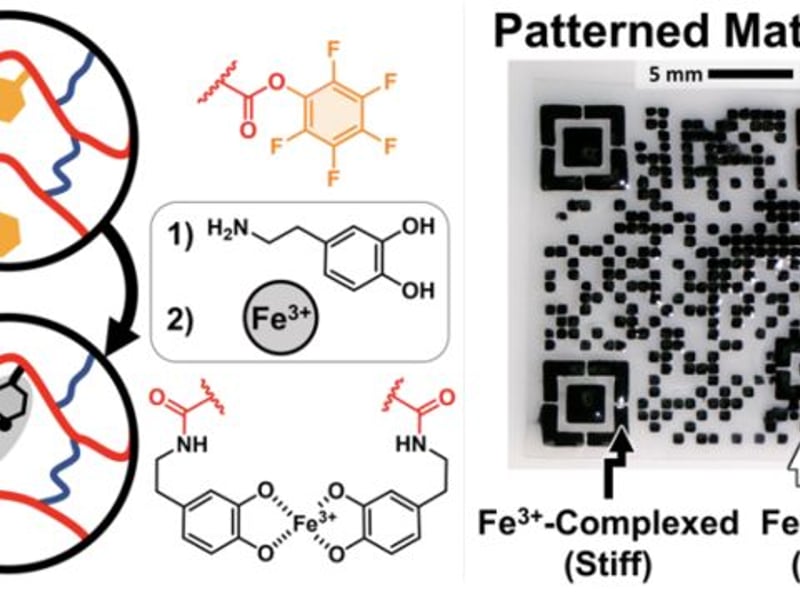
(Left) Cartoon overview of polymer network design via active ester chemistry to form networks with mixed iron-catechol and covalent crosslinking. (Right) Demonstration of high resolution patterned materials with specific hard (iron-complexed) and soft (iron-free) domains. The QR code is a link to the publication.
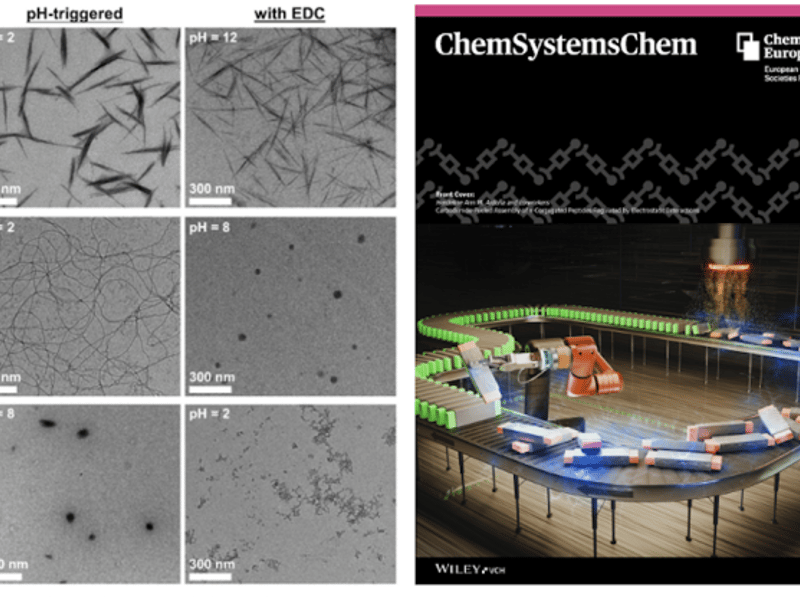
Left: A fuel-driven assembly and disassembly of semiconducting peptides show morphologies that are sequence-dependent and distinct from pH-driven assemblies; Right: Featured cover article in ChemSystemsChem Journal. Article also selected for the Systems Chemistry in the USA special collection and Chemistry Europe Editor’s Choice: Spotlights
Feb 24, 2023
University of California, Santa Barbara

Carbodiimide-Fueled Assembly of π-Conjugated Peptides Regulated by Electrostatic Interactions

Phillip Kohl, Youli Li, and Herdeline Ann M. Ardoña, UC Santa Barbara, UC Irvine
Using SAXS to investigate the relationship between molecular design and structure in the linear π-conjugated peptides assembled through a fuel-driven mechanism.
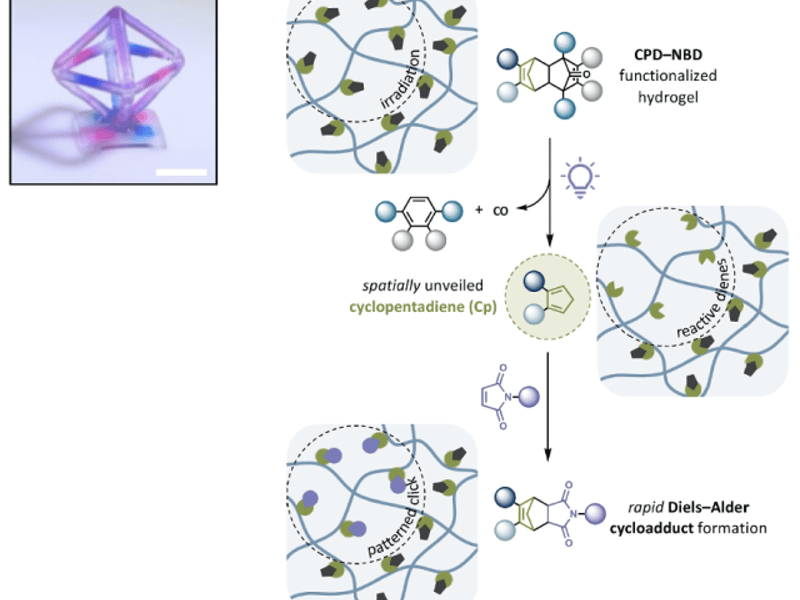
Upper left: Hydrogel 3D printed octahedron after patterning with CPD-NBD adducts. Scale bar: 5mm; Right: Schematic of hydrogel photopatterning mechanism with  CPD-NBD adducts.
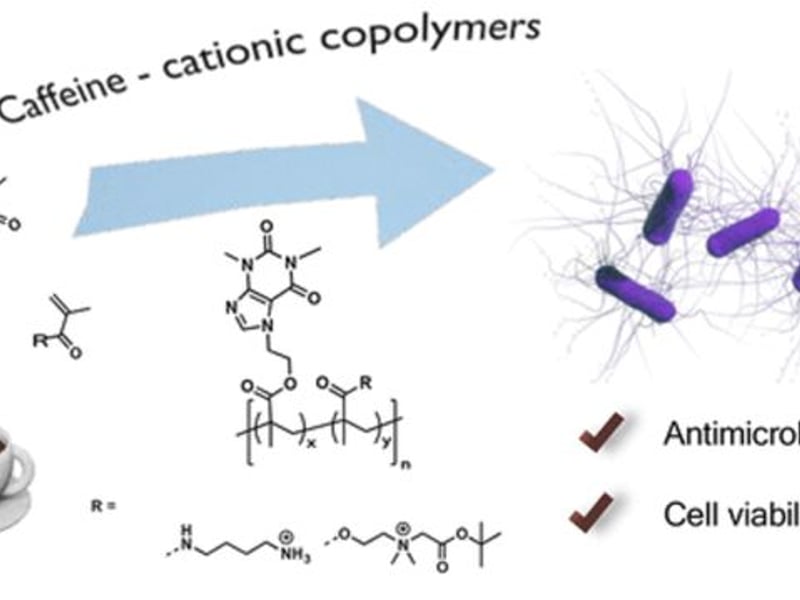
Preparation of caffeine–cationic copolymers displaying antibacterial properties and low cell viability in fibroblasts.
Feb 13, 2023
University of California, Santa Barbara

Caffeine and Cationic Copolymers with Antimicrobial Properties

Pedro Salas-Ambrosio, Shelby Vexler, Irene Chen, and Heather Maynard (UCLA)
Peptide-mimicking macromolecules with hydrophobic and cationic side chains that can kill bacteria by destabilizing their membranes.
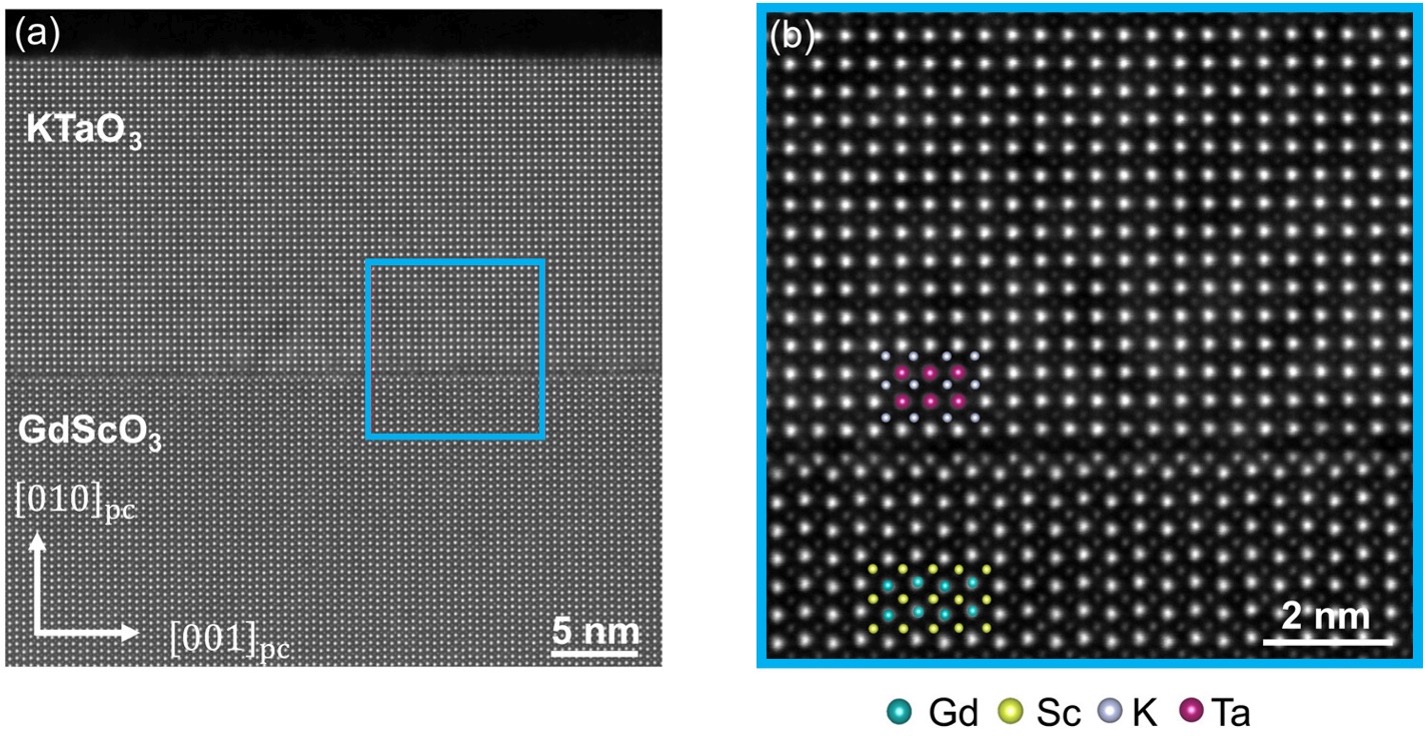
Figure 1: Atom resolution scanning transmission electron microscopy (STEM) image of a KTaO3 thin film on GdSc O3 and zoomed view on the interface with the substrate. Figure 2: X-ray diffraction ) X-ray diffraction θ-2θ scan of a high-quality KTaO3 thin film showing 00l peaks and Laue fringes.
Feb 2, 2023
Cornell University

The Multiplicative Effect of Knowledge Sharing

Kaveh Ahadi (NCSU), M.D. Williams (Clark Atlanta University), and D.A. Muller and D.G. Schlom (Cornell University).

This publication marks the first time that KTaO3 films have been grown by MBE. The approach used overcame the technical challenges of (1) the low vapor pressure of tantalum (normally impossible in a stable MBE effusion cell due to the low vapor pressure of tantalum) and (2) the safety issues of safely handling potassium, which is highly flammable. The resulting films have the highest structural quality of any KTaO3 films ever grown judging from the narrowness of the x-ray diffraction rocking curves and rather featureless microstructure revealed by STEM.