Research Highlights

GlycoMIP Hosts 2nd Annual Summer School at VT
Oct 1, 2024
Virginia Polytechnic Institute and State University

GlycoMIP Hosts 2nd Annual Summer School at VT

Maren Roman, Virginia Tech, Robert J. Woods, University of Georgia
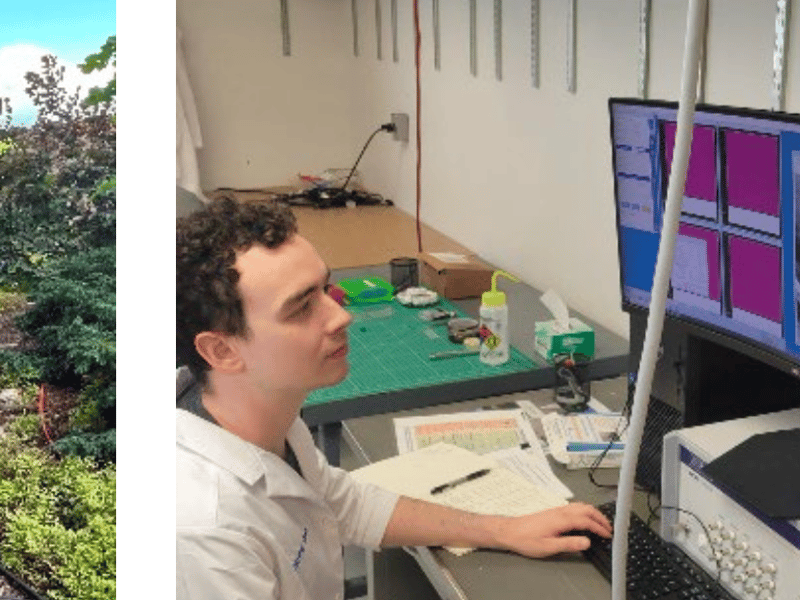
GlycoMIP’s second annual summer school was held in the VT GlycoMIP facility June 13-17, 2022. A diverse group of 22 academic and industry scientists from 11 different universities and companies participated in the program.
2024 RSVP Scholars at the 2DCC-MIP facility
Sep 30, 2024
Pennsylvania State University

Resident Scholar Visitor Program (RSVP) 2024

Kelsey Maxin, Ron Redwing, Stephanie Law, Kevin Dressler, Joan Redwing (2DCC-MIP)
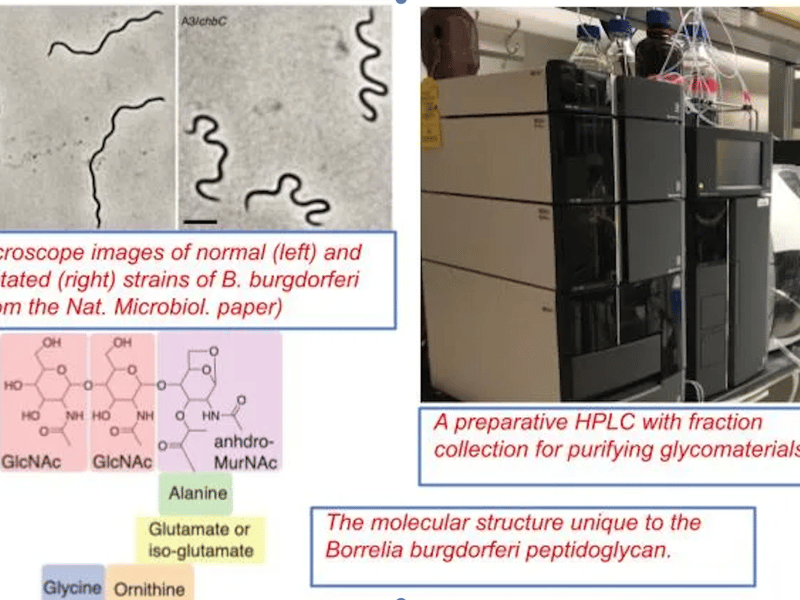
RSVP is a training and professional development program for visiting graduate students and early career researchers to learn on-site at the 2DCC for extended periods.
GlycoMIP and a Novel Peptidoglycan Structure in Lyme Disease
Sep 1, 2024
Virginia Polytechnic Institute and State University

GlycoMIP and a Novel Peptidoglycan Structure in Lyme Disease

Maren Roman, Virginia Tech, Robert J. Woods, University of Georgia
The GlycoMIP User Facility at Virginia Tech supported the research of Dr. Brandon Jutras, an Assistant Professor in the Department of Biochemistry at Virginia Tech and frontier researcher in understanding, detecting and eradicating Lyme disease. Dr. Jutras has published high-impact article in Nature Microbiology revealing the glycan composition of the Lyme disease spirochaete Borrelia burgdorferi’s cell wall.
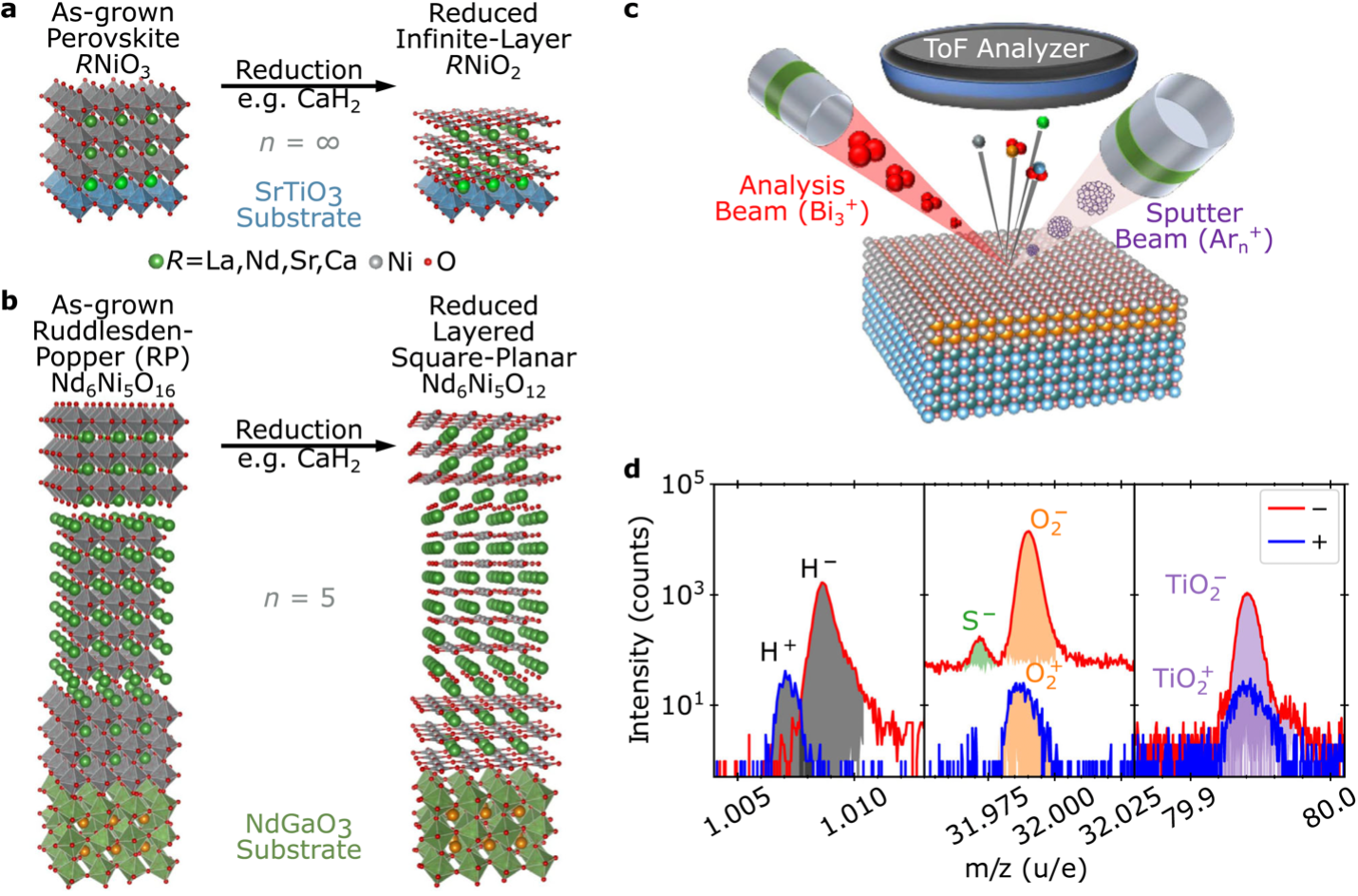
Figure 1: Schematic crystal structures of precursor phase and reduced to n = ∞ (a) and n = 5 (b) layered square-planar nickelate compounds. c) Schematic of the ToF-SIMS measurement technique. d) SIMS spectra measured separately for positive and negative ions are analyzed by identifying peaks by mass-to-charge ratio (m/z) and extracting integrated area.
Aug 27, 2024
Cornell University

Is Hydrogen Essential for Superconductivity in the Nickelates?

Julia Mundy (Harvard), Antia Botana (ASU), and collaborators
Here, PARADIM users from Harvard and Arizona State Universities and their collaborators searched for hydrogen across a wide range of superconducting and non-superconducting layered nickelate films, with different cation and dopant chemistry, structures, growth methods, reduction conditions, and crystalline quality.
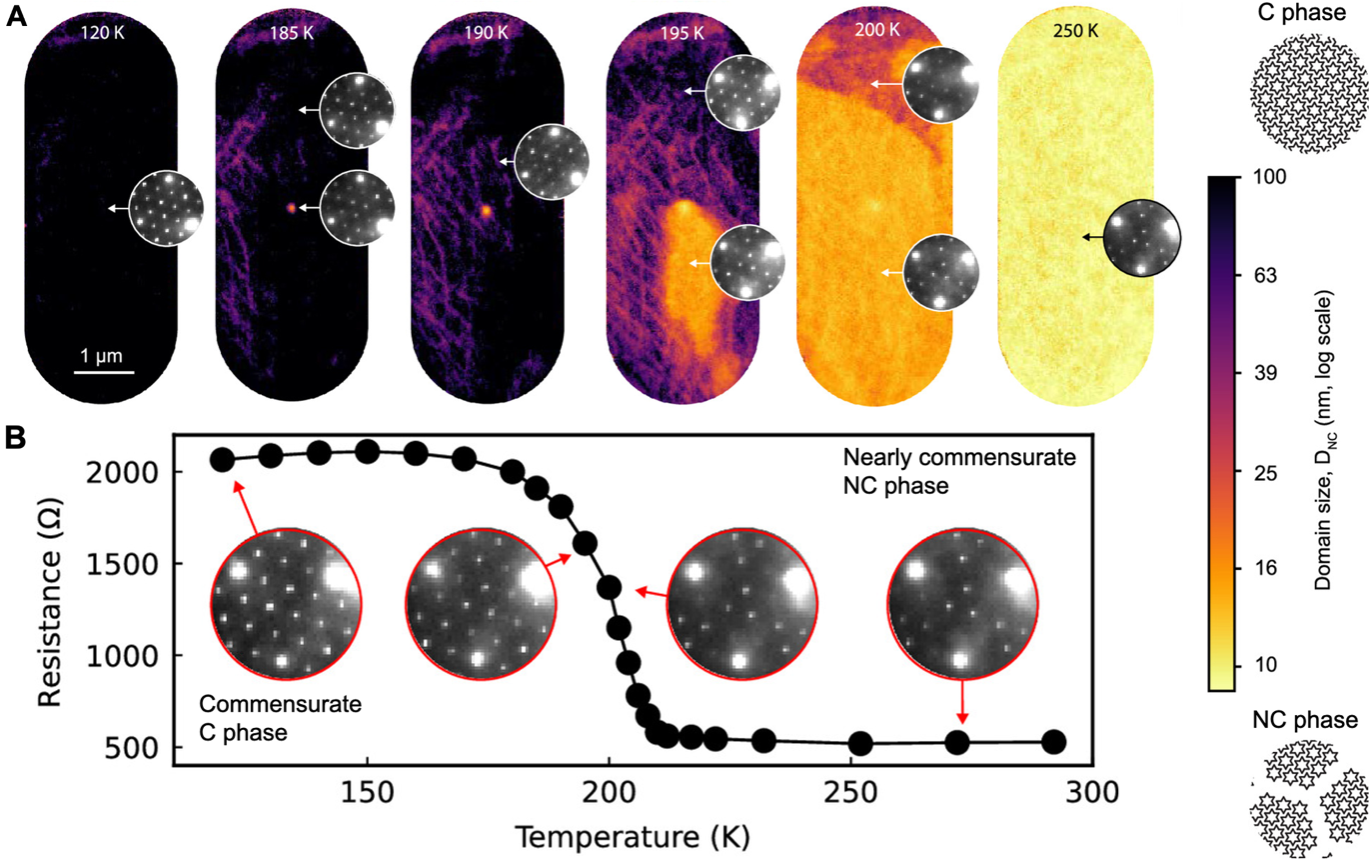
Figure 1: CDW phase transition during warming experiment. (A) 4D-STEM derived maps, color-coded for the domain size DNC for select temperatures. Insets show extracted diffraction data. (B) The electrical resistance measured during the in situ 4D-STEM experiment upon warming.
Aug 6, 2024
Cornell University

Harnessing Machine Learning to Visualize and Understand the Role of Defects in a Metal-to-Insulator Transition in a Charge Density Wave Material

Judy Cha (local user, Cornell), Lena F. Kourkoutis & Eun-Ah Kim (PARADIM, Cornell)
Here, PARADIM’s development of real-time temperature control during cryogenic scanning transmission electron microscopy has enabled its users to image the CDW transition while altering temperature and electric field. Unsupervised machine learning is applied to cluster the five-dimensional, terabyte scale microscopy datasets, and demonstrates a one-to-one correlation between device resistance, CDW phase, and the material microstructure. The team shows that basal dislocations—which are ubiquitous in 2D materials—both nucleate and pin the CDW transition and locally alter the transition temperature (Tc) by nearly ~75 K. Further, the team shows that the dislocation density can be used to engineer device properties.
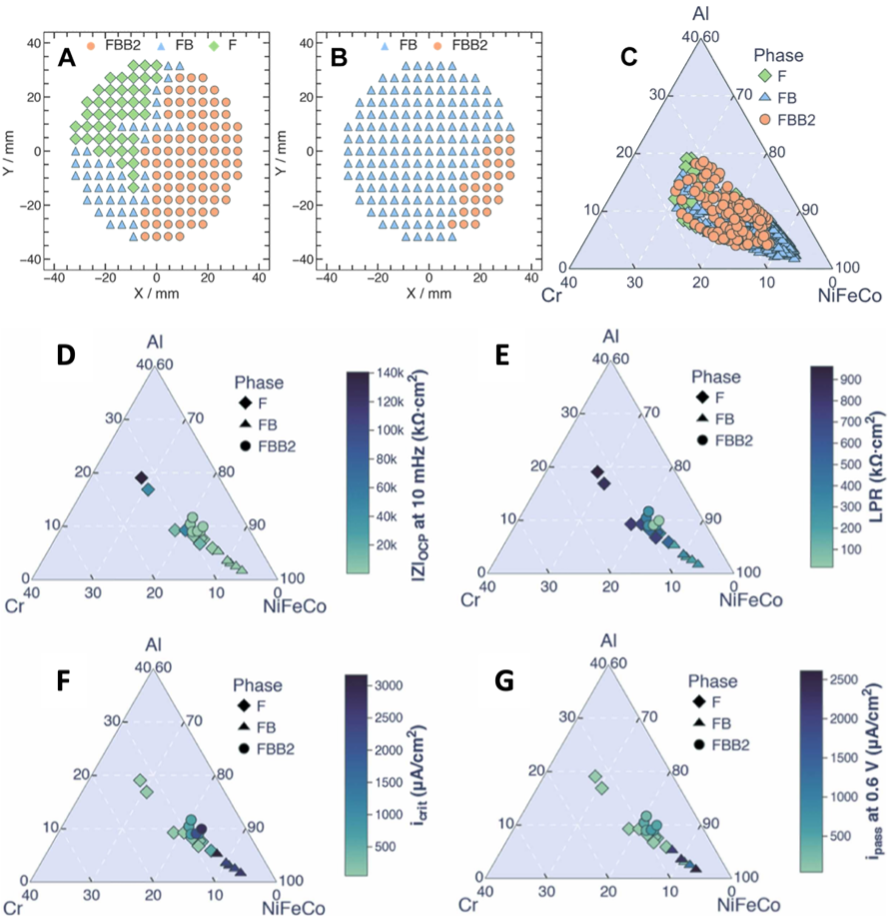
Figure: Compositions and crystal structures of the combinatorial library wafers. (A, B) XRD at each spot on the wafers was measured. (C) Pseudo-ternary phase diagram of all spots as a function of composition. (D-G) Scanning droplet cell results of the aqueous electrochemical measurements on the CL wafers plotted on the pseudo-ternary phase diagrams, |Z|OCP (D), LPR measured after reduction of the air-formed oxide (E), critical current density for passivation (F), passive current density, ipass at 0.6 V (G).
Aug 1, 2024
Cornell University

High-Throughput Aqueous Passivation Behavior of Thin-Film versus Bulk Multi-Principal Element Alloys in Sulfuric Acid

Mitra L. Taheri (JHU), John R. Scully (U. Virginia), and Karl Sieradzki (ASU)
In this work, 177 alloy spots from a CL with varying composition and structure were studied. Bulk samples of (FeCoNi)1-x-yCrxAly were prepared and processed at PARADIM using unique capabilities of its ancillary synthesis facility, including oxygen free arc melting and water jet cutting capabilities to enable quantitative comparisons with the CL spots. Due to varying grain size and the grain boundary dissolution a one-to-one correlation could not be made useful between thin films and bulk.
GlycoMIP User Facility installs first two Glyconeers® in U.S.
Aug 1, 2024
Virginia Polytechnic Institute and State University

GlycoMIP User Facility installs first two Glyconeers® in U.S.

Maren Roman, Robert J. Woods
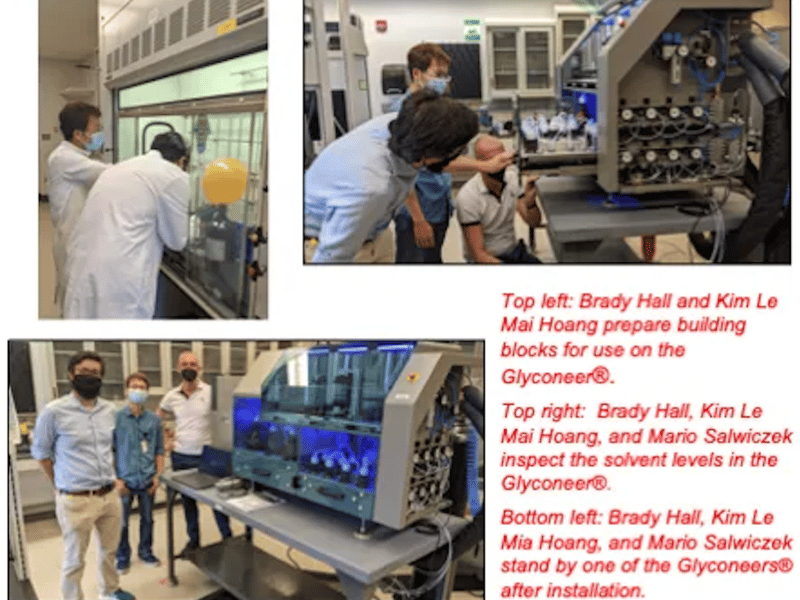
Meet Gottfried and Ingeborg – fully automated oligosaccharide synthesizers (Glyconeers®) from GlycoUniverse. The Glyconeers® are complemented by a suite of preparative and analytical instruments housed in the MP's synthesis facility that release resin-bound glycans, deprotect, purify, and characterize them.
GlycoMIP "graduates" first Summer Undergraduate Research Fellow
Jun 1, 2024
Virginia Polytechnic Institute and State University

GlycoMIP "graduates" first Summer Undergraduate Research Fellow

Maren Roman, Virginia Tech, Robert J. Woods, University of Georgia
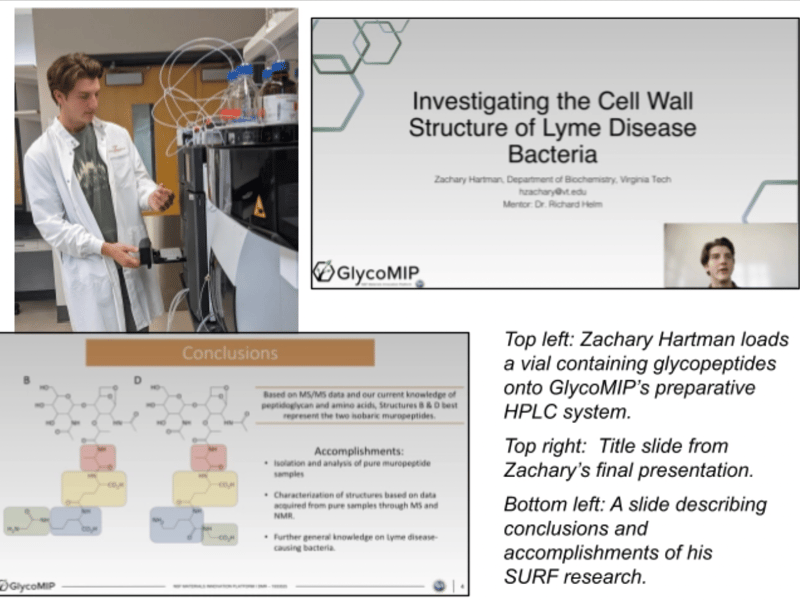
The GlycoMIP SURF program offers a unique path to reach and engage prospective graduate students. The existing FLSI SURF program offers GlycoMIP the opportunity to participate in an existing program that, for many years, has successfully introduced undergraduate students to graduate-level research. Through this partnership, GlycoMIP offers students a comprehensive experience, including professional development workshops, significant laboratory work, and one-on-one mentorship by a faculty member or research scientist.
GlycoMIP inaugural Summer School reaches 200 participants
May 2, 2024
Virginia Polytechnic Institute and State University

GlycoMIP inaugural Summer School reaches 200 participants

Maren Roman, Virginia Tech, Robert J. Woods, University of Georgia
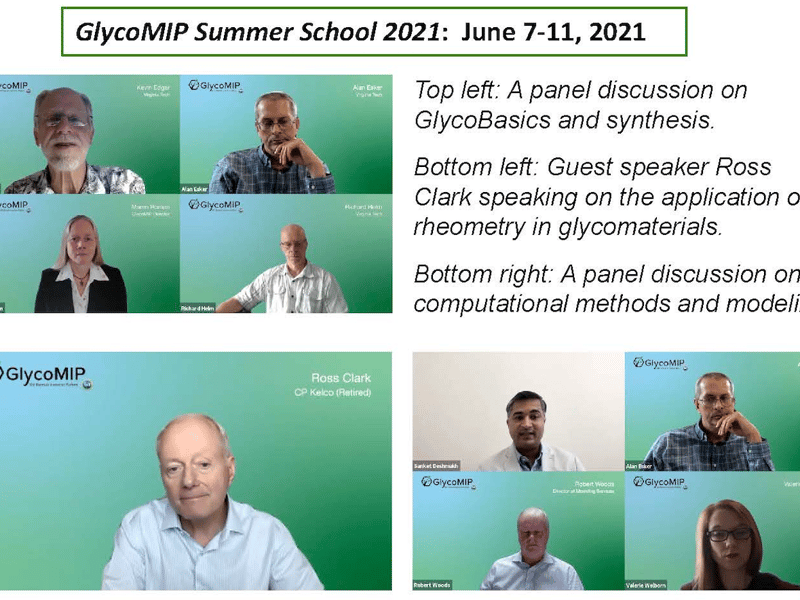
GlycoMIP hosted its first Summer School, a virtual event. The event featured 15 instructors and offered content aligned with the GlycomMIP Facilities of synthesis, analysis and modeling services.
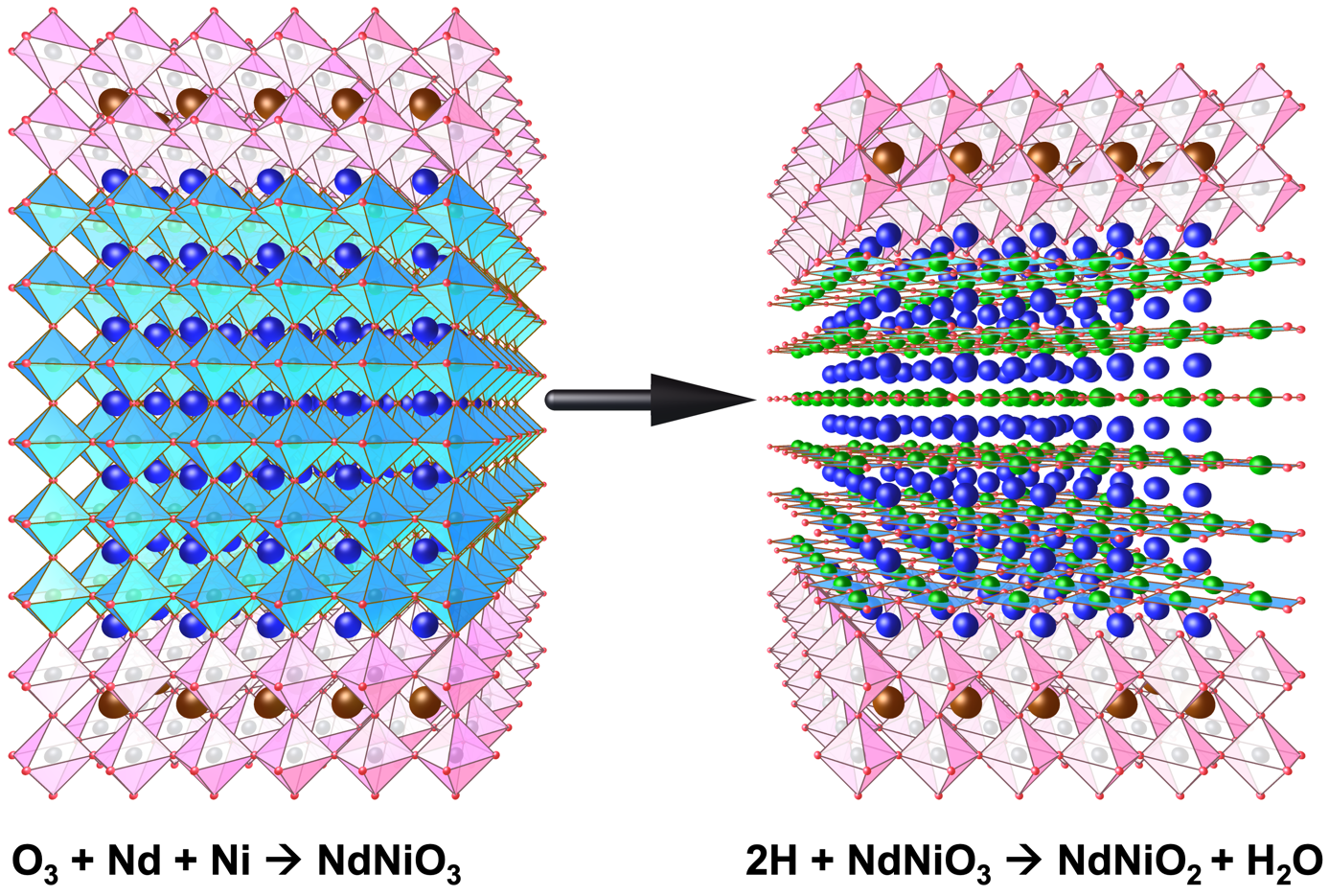
Figure 1: Schematic of the two-step in situ synthesis of NdNiO2. (left) First the NdNiO3 film (shown in blue) is grown by MBE. (right) Second, the temperature is lowered, and atomic hydrogen is used to scavenge oxygen from the film and reduce it to NdNiO2. A capping layer of SrTiO3 (shown in pink) helps to avoid damage to the surface of the NdNiO2 layer and promotes uniform oxygen removal.
Mar 25, 2024
Cornell University

Simplified (and superior!) Synthesis of Nickelate Superconductors

L.F. Kourkoutis, D.G. Schlom, and K.M. Shen (Cornell University)

Here, PARADIM presents X-ray scattering and spectroscopy measurements on a series of NdNiO2+x samples, which reveal that the signatures of charge density wave order are absent in fully reduced, single-phase NdNiO2. The 3a0 superlattice peak instead originates from a partially reduced impurity phase where excess apical oxygens form ordered rows with three-unit-cell periodicity.