Latest News
Highlight · Jun 1, 2025
Cornell University
Topotactic Ion Intercalation for Designer Magnetic Heterostructures and Devices
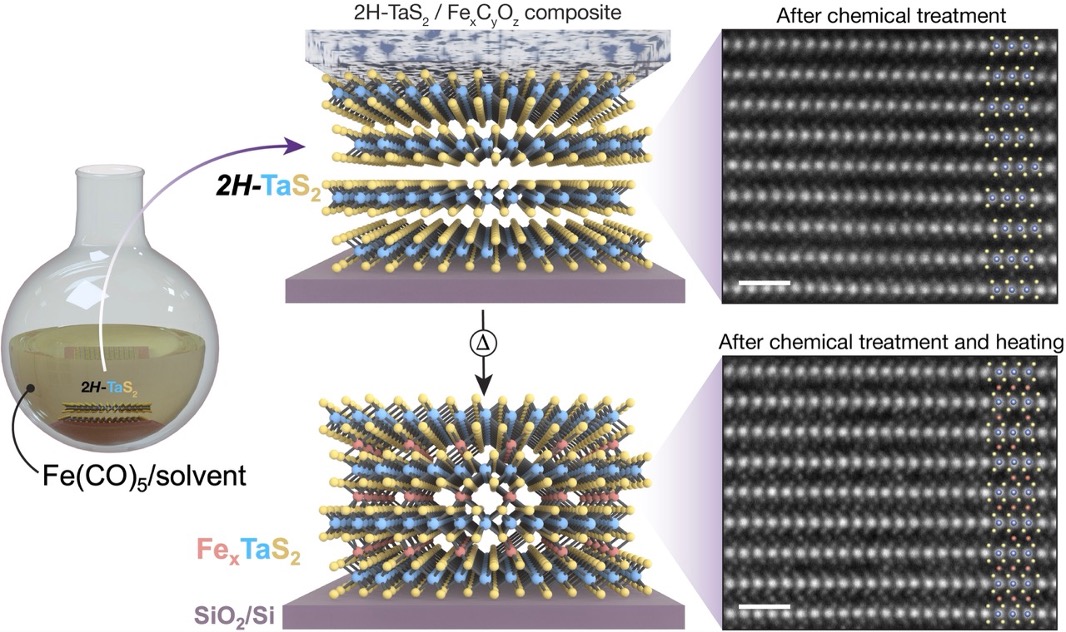
UC Berkeley researchers have developed a method to synthesize magnetic intercalation compounds within transition metal dichalcogenides (TMDs), enhancing the customization of electronic and magnetic device architectures. This approach, utilizing thermal annealing and atomic-resolution imaging, allows for precise control over material properties, opening avenues for advanced spintronic applications.
Highlight · Jun 1, 2025
Cornell University
Sensing the Local Magnetic Environment in Thin Films
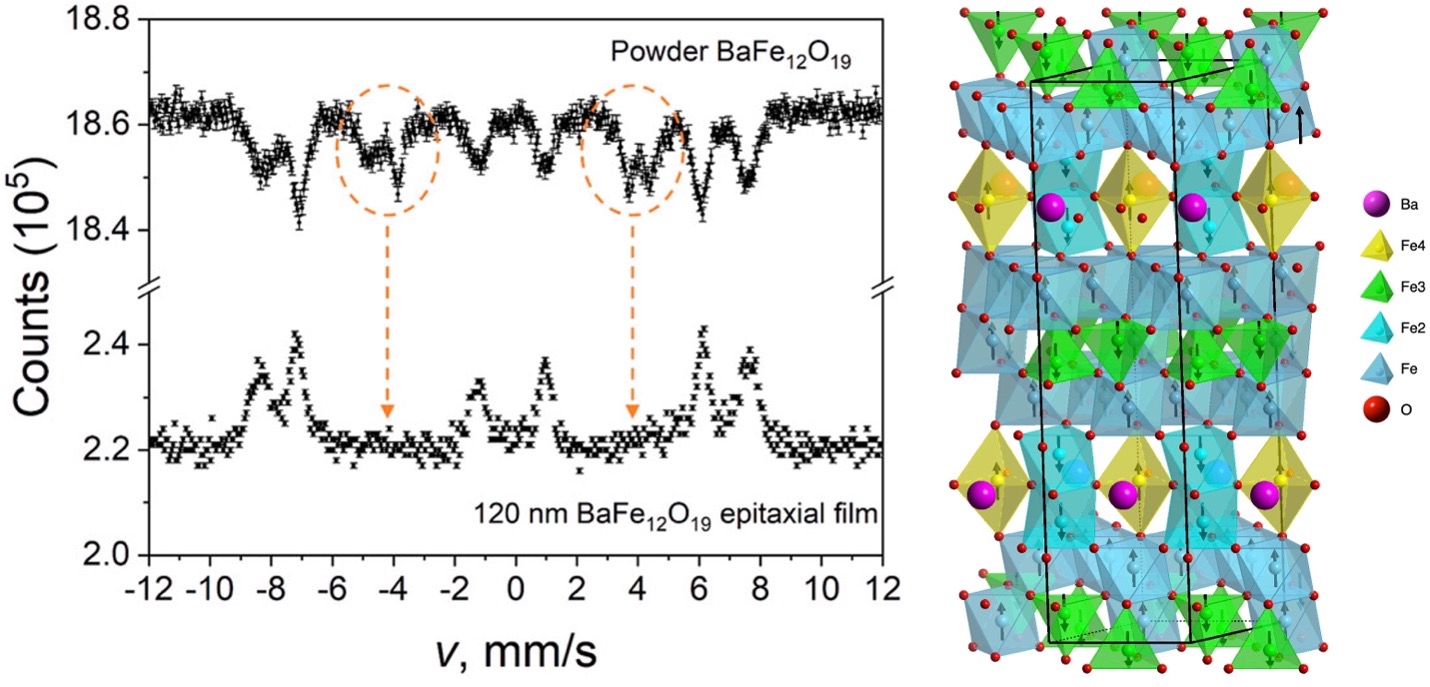
PARADIM Highlight #106 discusses the application of Mössbauer spectroscopy, specifically conversion electron Mössbauer spectroscopy (CEMS), to study thin films of isotopically purified iron. Researchers from Spelman College and Cornell University explored the magnetic orientation of iron in films, demonstrating its utility in analyzing complex magnetic structures.
Highlight · May 1, 2025
Cornell University
Signatures of Ambient Pressure Superconductivity
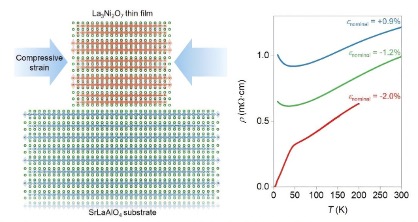
Stanford/SLAC team led by Harold Hwang stabilized ambient-pressure superconductivity in bilayer nickelate La3Ni2O7 thin films using substrate-induced lateral compression, achieving Tc about 26–42 K; defects and oxygen content influence transport. PARADIM EM techniques enabled microstructure insights. This opens routes to studying superconductivity in nickelates at ambient pressure.
Highlight · May 1, 2025
Cornell University
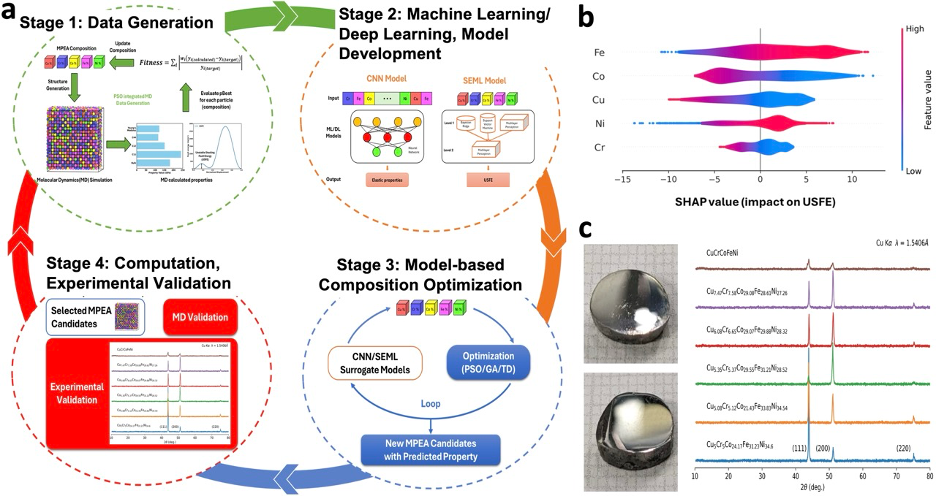
Experimentally validated Inverse Design of FeNiCrCoCu MPEAs and Unlocking Key Insights with Explainable AI
Researchers developed a machine learning-based computational workflow to design FeNiCrCoCu multi-principal element alloys (MPEAs) with improved mechanical properties. Synthesized MPEAs showed experimental validation of predictions. This integrated approach enhances materials design and can be applied to various material systems. Research supported by GlycoMIP and PARADIM.
News · Apr 29, 2025
University of California, Santa Barbara
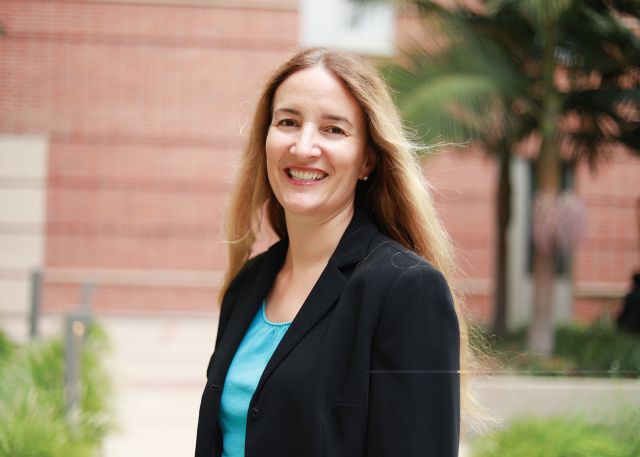
Heather Maynard elected to the National Academy of Sciences
UCLA Professor Heather Maynard has been elected to the National Academy of Sciences, recognizing her significant contributions to polymer chemistry and biomaterials. This honor highlights her impact on the scientific community and her dedication to innovation, aligning with BioPACIFIC MIP's mission.

News · Apr 2, 2025
University of California, Santa Barbara
Rachel Segalman named fellow of the American Association for the Advancement of Science
Rachel Segalman of UC Santa Barbara has been elected a 2025 Fellow of the American Association for the Advancement of Science, recognizing her contributions to materials science and polymer engineering. She is one of 46 UC researchers honored, showcasing the university's leadership in scientific advancement.
Highlight · Apr 1, 2025
Virginia Polytechnic Institute and State University
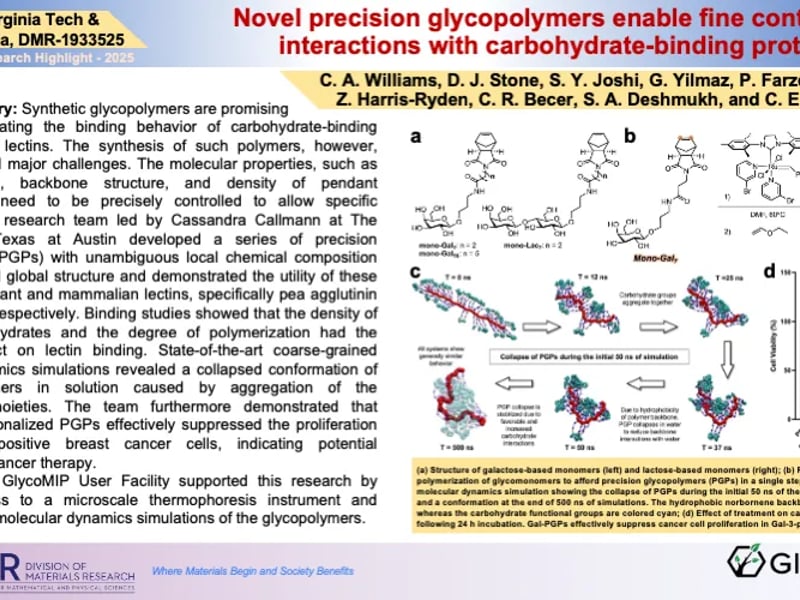
Novel precision glycopolymers enable fine control over interactions with carbohydrate-binding proteins
C. A. Williams, D. J. Stone, S. Y. Joshi, G. Yilmaz, P. Farzeen, S. Jeon, Project summary: Synthetic glycopolymers are promising Z. Harris-Ryden, C. R. Becer, S. A. Deshmukh, and C. E. Callmann
A team of researchers, led by Cassandra Callmann at The University of Texas at Austin, developed a synthesis method for glycopolymers that affords precise control over polymer length, backbone structure, and density of pendant carbohydrates. The team identified the latter to be a critical factor for lectin binding with grafting densities below 50% resulting in weaker interactions.
Highlight · Apr 1, 2025
Cornell University
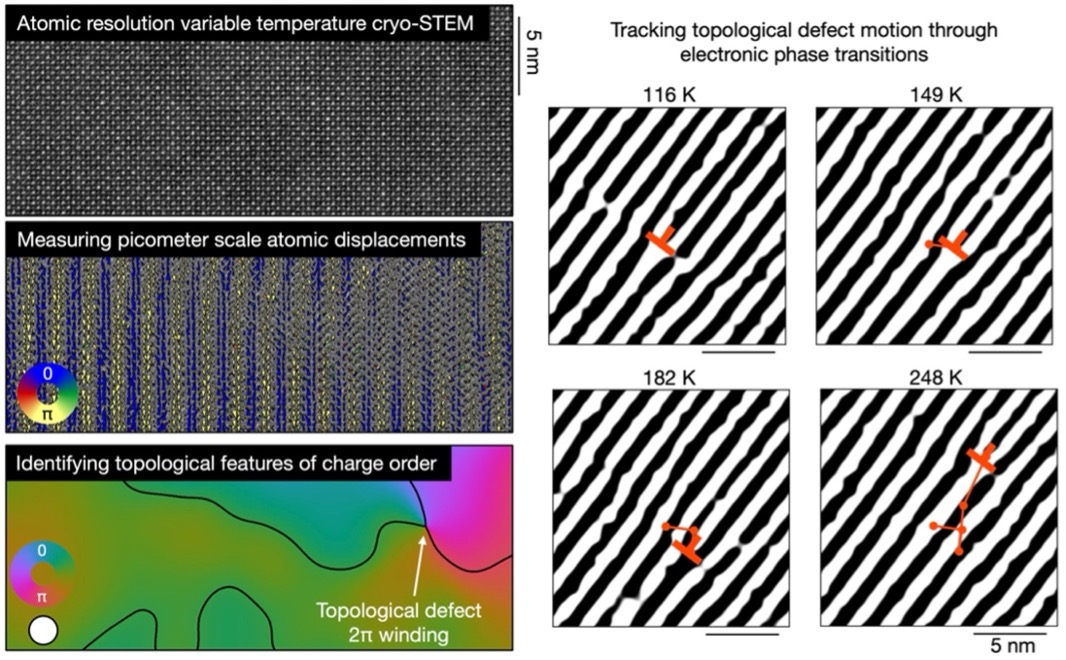
Tracking Topological Defect Motion Through Temperature at the Atomic Scale
PARADIM Highlight #102 reports atomic-resolution tracking of topological defects during the melting of charge-ordered Bi(1−x)Sr(x−y)Ca(y)MnO3 using cryogenic scanning transmission electron microscopy. It reveals defect-network reconfigurations and incommensurate charge order, offering nanoscale insight into electronic phase transitions with relevance to superconductivity and quantum materials.
Highlight · Apr 1, 2025
Cornell University
The Right Squeeze: Crafting the Ferro-electric Transitions of KNbO3 Thin Films
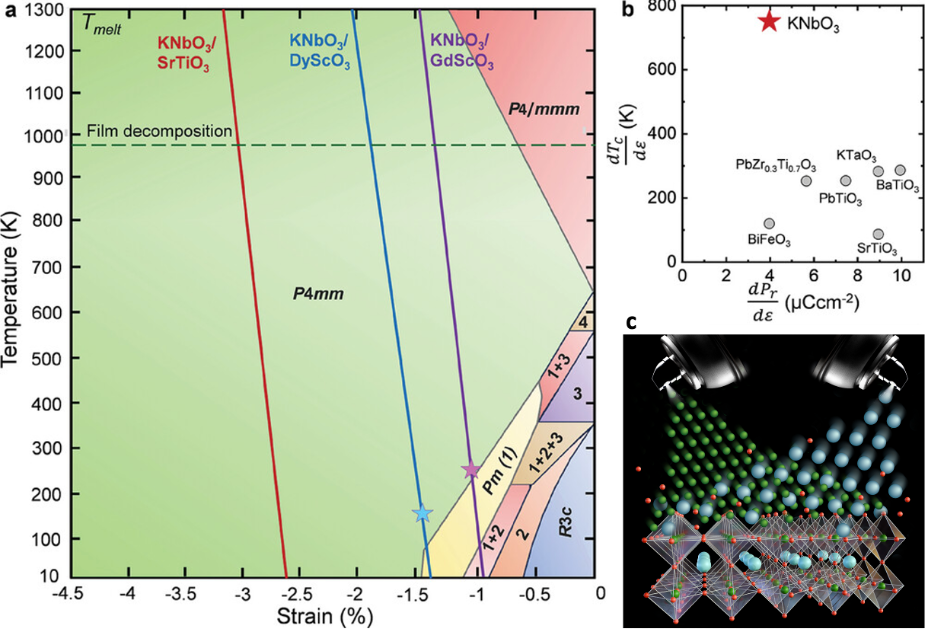
PARADIM Highlight #99 reports KNbO3 ferroelectric thin films grown by suboxide molecular-beam epitaxy, showing colossal strain tuning: Tc exceeds 975 K, a single tetragonal phase persists from 10–975 K, polarization up 46%, and second-harmonic generation up ~200%. Lead-free material with high-temperature ferroelectric potential.
Highlight · Apr 1, 2025
Cornell University
Revealing the Imperfection of Perfection: The Importance of Frankness in a Meaningful Collaboration
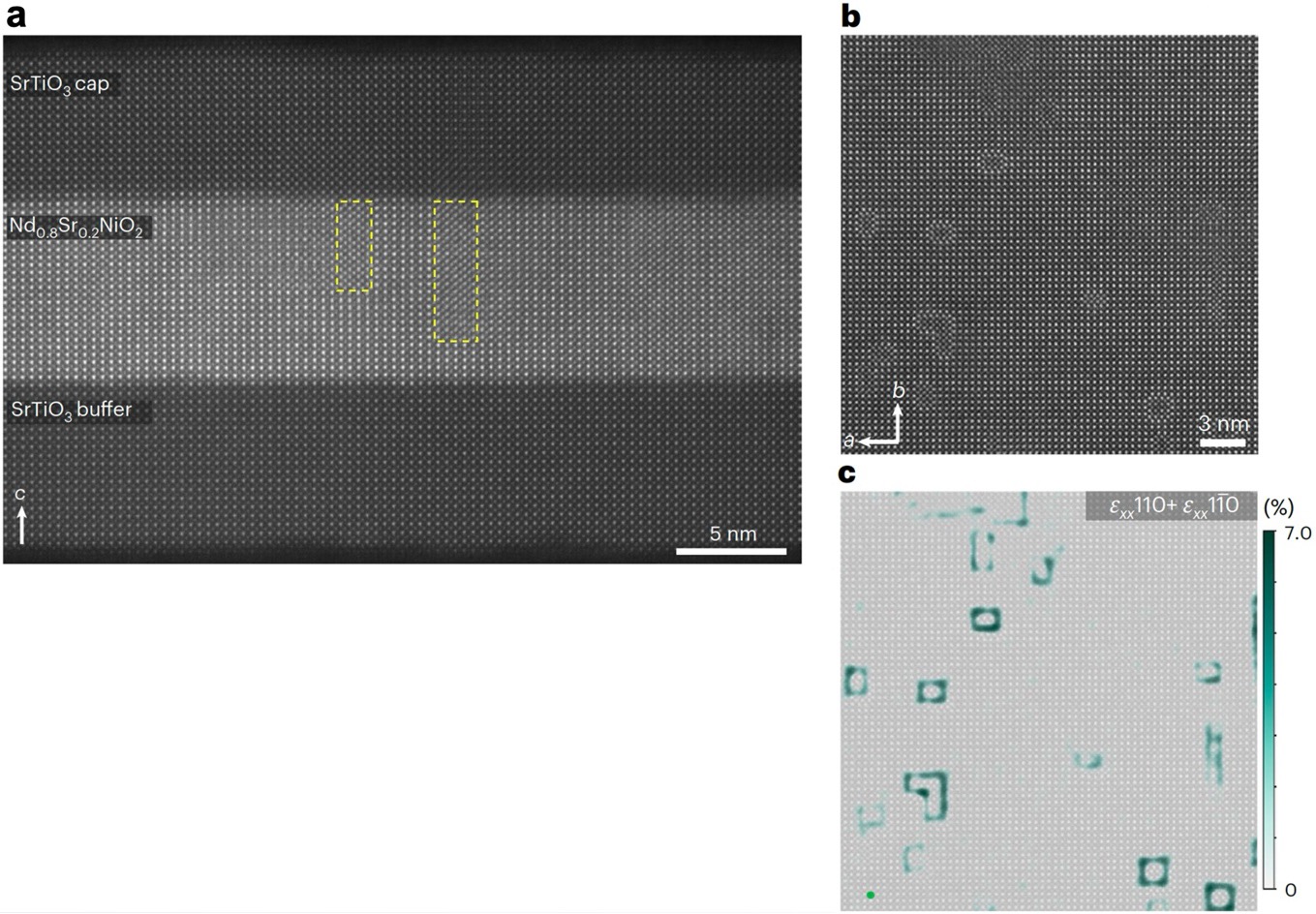
PARADIM Highlight #100 discusses refining nickelate superconductors by creating freestanding (Nd,Sr)NiO2 heterostructures released from substrates. Through SEM/TEM analysis, the team assesses substrate strain effects on superconductivity, enabling measurements before/after release. Led by Hwang and Kourkoutis, the work yields millimeter-to-μm freestanding films for broader studies.
Showing 41 to 50 of 363