News
news
Heather Maynard elected to the National Academy of Sciences
Apr 29, 2025
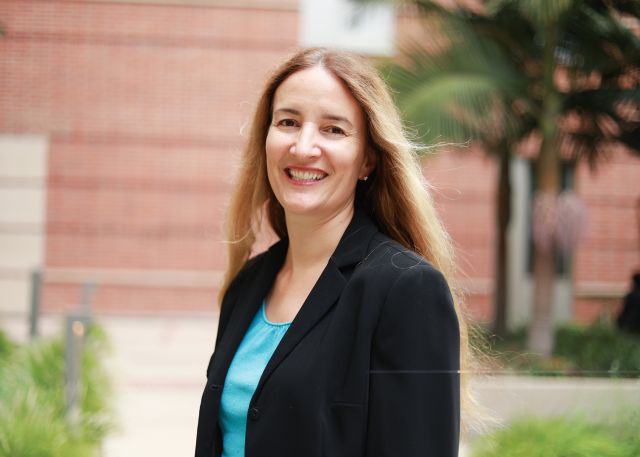
UCLA Professor Heather Maynard has been elected to the National Academy of Sciences, recognizing her significant contributions to polymer chemistry and biomaterials. This honor highlights her impact on the scientific community and her dedication to innovation, aligning with BioPACIFIC MIP's mission.
News
Rachel Segalman named fellow of the American Association for the Advancement of Science
Apr 2, 2025
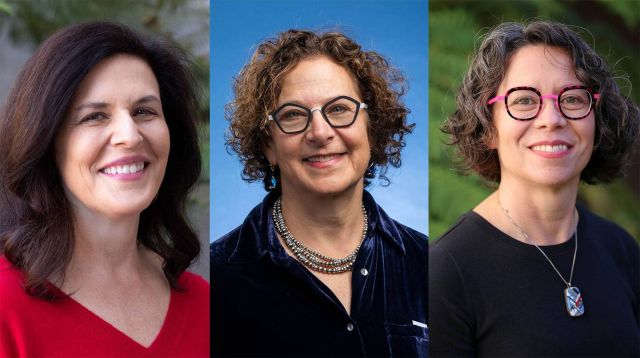
Rachel Segalman of UC Santa Barbara has been elected a 2025 Fellow of the American Association for the Advancement of Science, recognizing her contributions to materials science and polymer engineering. She is one of 46 UC researchers honored, showcasing the university's leadership in scientific advancement.
News
‘Nanodot’ control could fine-tune light for sharper displays, quantum computing
Mar 7, 2025
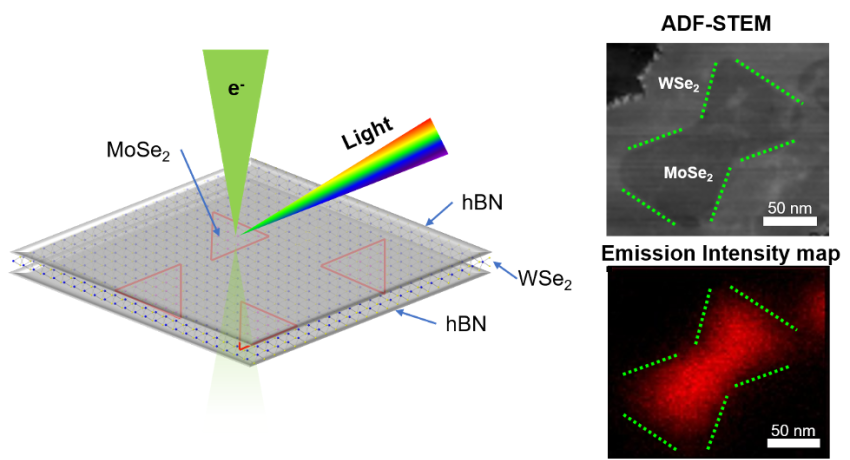
Researchers from Penn State and Université Paris-Saclay have developed precise control over light emitted from nanodots embedded in two-dimensional materials. This breakthrough could enhance high-resolution screens and advance quantum computing by manipulating light frequency and wavelength via quantum confinement. Their work involves combining different 2D materials to optimize light emission.
News
BioPACIFIC MIP Fellow Elizabeth Murphy Wins 2025 Henkel Award
Mar 3, 2025
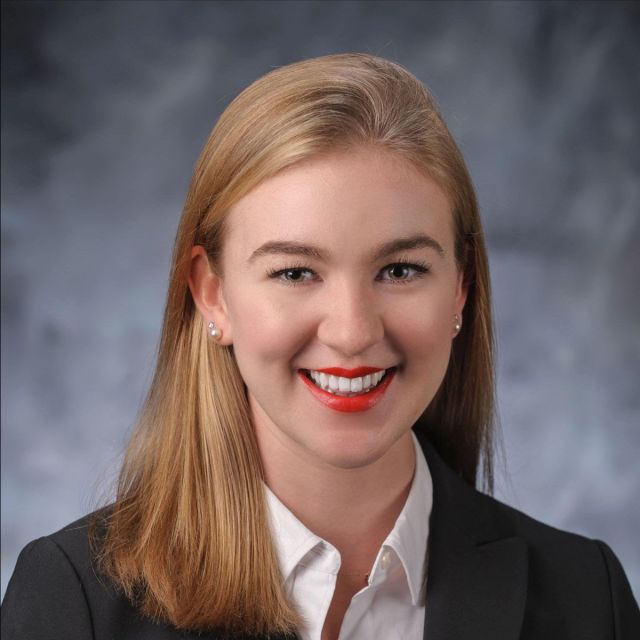
BioPACIFIC MIP congratulates Elizabeth Murphy on winning the 2025 Henkel Award for Outstanding Graduate Research in Polymer Science. Her innovative research on block copolymers and contributions to the MIP community were pivotal. Murphy, set to graduate from UCSB in March 2025, will join Dow Chemical as a Senior Research Specialist.
News
UCSB Professor M. Scott Shell named Fellow of the American Institute of Chemical Engineers
Feb 25, 2025
M. Scott Shell, a professor at UC Santa Barbara, has been elected a Fellow of the American Institute of Chemical Engineers for his pioneering work in multiscale modeling and computational techniques. This prestigious title recognizes significant professional accomplishments in the field of chemical engineering.
News
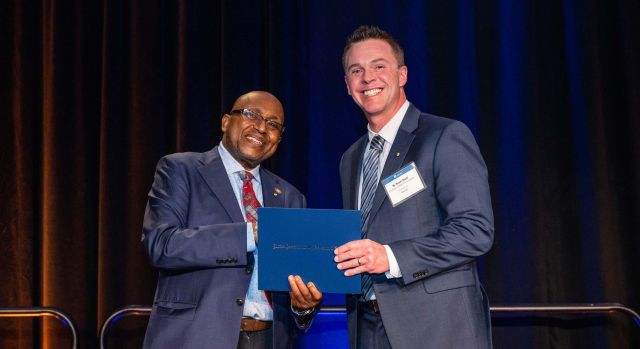
BioPACIFIC MIP Awards Eight CAPS Fellowships
Feb 4, 2025
BioPACIFIC MIP has selected eight projects for the CAPS Fellowships, which utilize high-throughput automation for advancements in polymer science. The awarded researchers will optimize materials and processes through training and access to cutting-edge technology. Each fellowship provides up to $10,000 for research at UC Santa Barbara and UCLA.
News
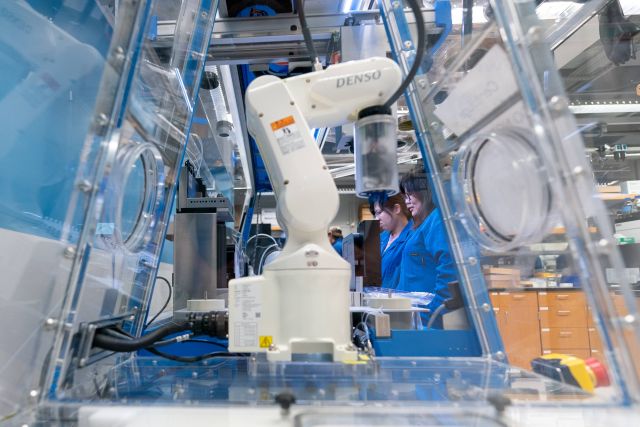
Prof. Craig Hawker Selected as the 2025 Herman F. Mark Polymer Chemistry Awardee
Jan 7, 2025
Professor Craig Hawker from BioPACIFIC MIP has been awarded the 2025 Herman F. Mark Polymer Chemistry Award, recognizing his leadership in polymer science. The award is given biennially at the ACS meeting, and a symposium in his honor will take place at the Fall 2025 ACS National Meeting.

News
Third MIP Competition Now Open for Proposals
Dec 12, 2024
The scientific focus of the MIP program is subject to change from competition to competition. Information about the existing MIPs, from two previous competitions in 2015 and 2019, can be found at mip.org. The third MIP competition, in 2025, will accept proposals on alloys, amorphous, and composite materials.

News
$3M grant targets integrated semiconductor for smarter, greener electronics
Dec 11, 2024
Penn State researchers received a $3 million DARPA grant to integrate gallium nitride with silicon for more efficient microelectronics. This hybrid approach aims to improve performance in power-intensive applications while reducing costs. The project's innovation in using 2D materials as seed layers could revolutionize semiconductor integration and energy efficiency.

News
Video Showcases 2DCC Research Efforts
Nov 1, 2024
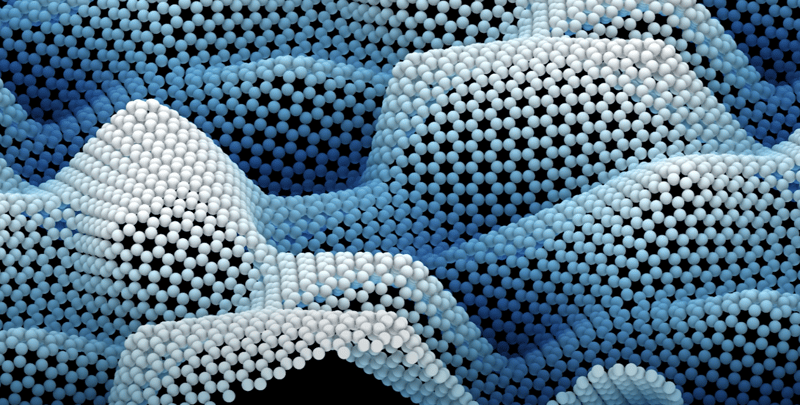
Imagine charging your smartphone once a month, having flexible video screens that you can roll up into your pocket, and sending information through an internet that uses quantum mechanics to keep your data safe. The 2DCC MIP is working on advancing materials that can contribute to these ideas. Learn all about the platform’s ongoing research and efforts.
Showing 21 to 30 of 119