Research Highlights
Nov 14, 2022
Cornell University
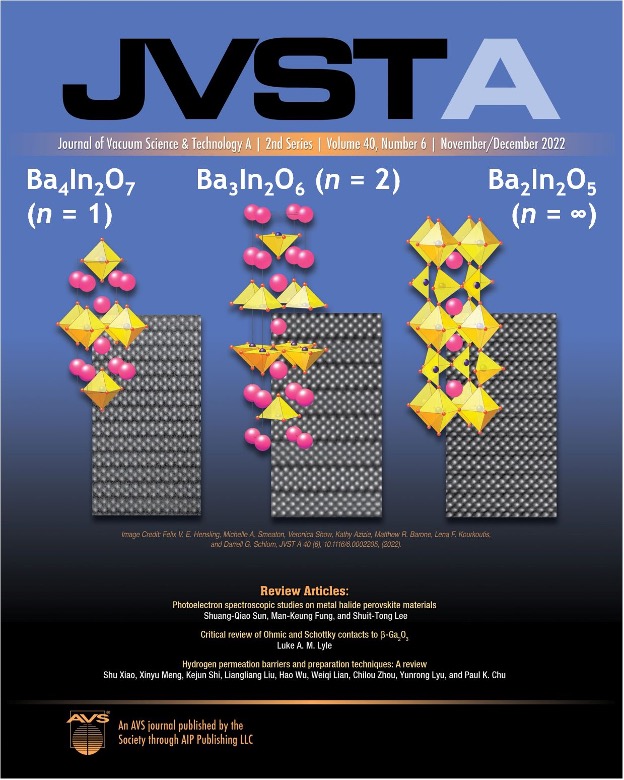
From Machine Learning to Discovery of New Family Member
Lena F. Kourkoutis and Darrell G. Schlom (Cornell University)
Thin films of Ba3In2O6 had never been made and PARADIM researchers were able to grow the desired phase using a new variant of molecular-beam epitaxy (MBE), suboxide MBE, developed in PARADIM. In addition to succeeding in the growth of the targeted phase, Ba3In2O6, PARADIM researchers also discovered a new barium indate phase with an even simpler crystal structure, Ba4In2O7, that is analogous to the first high-temperature cuprate superconductor discovered, (La,Ba)2CuO4.
Oct 31, 2022
Cornell University
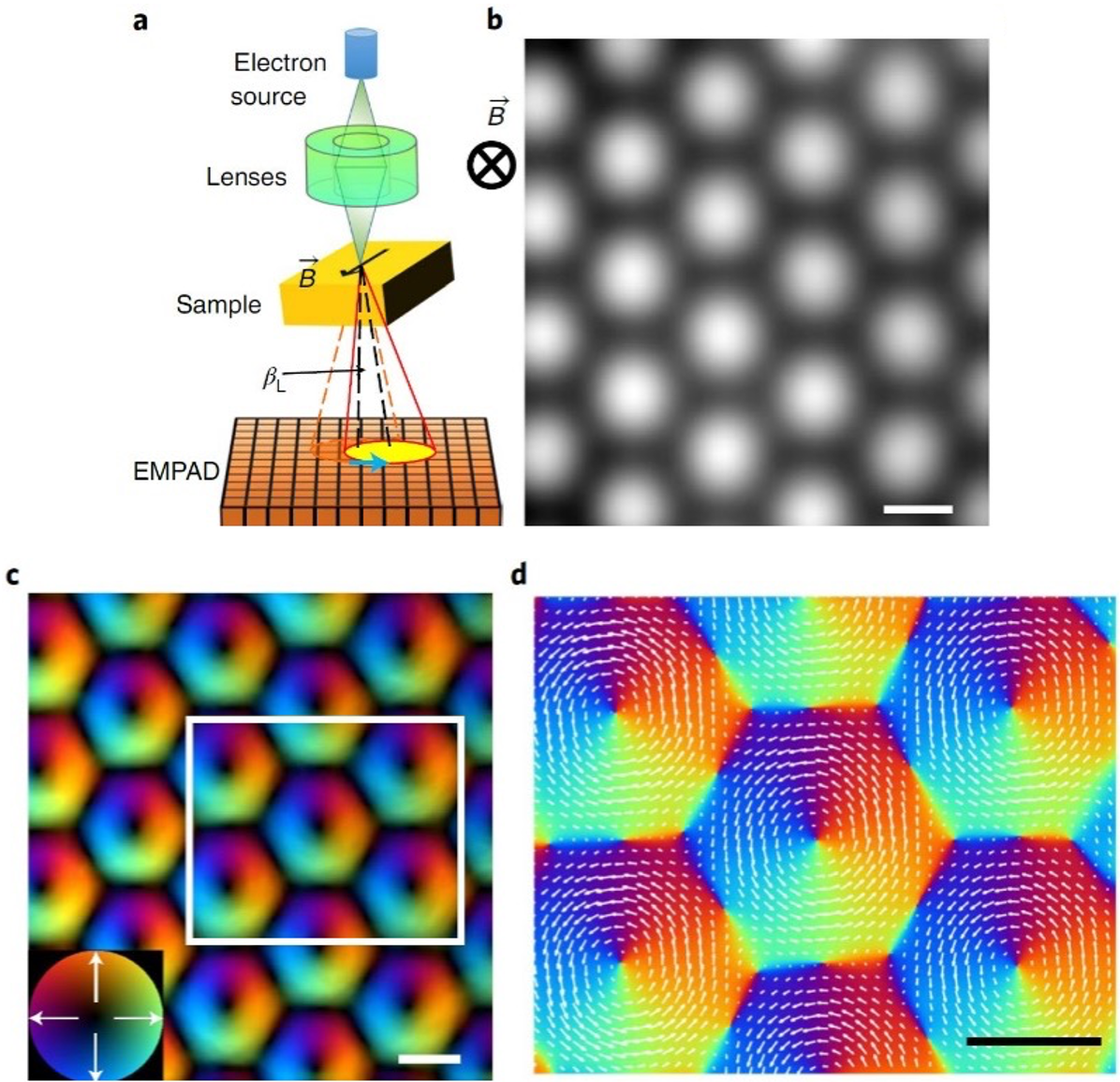
Lorentz Ptychography for high-resolution, high sensitivity magnetic imaging
David A. Muller (Cornell University)
The study establishes a quantitative, high-resolution magnetic microscopy technique that can reveal nanoscale spin textures, especially magnetization discontinuities and topological defects in nanomagnets. The technique’s high-dose efficiency should also make it well suited for the exploration of magnetic textures in electron radiation-sensitive materials such as organic or molecular magnets.
Oct 14, 2022
University of California, Santa Barbara
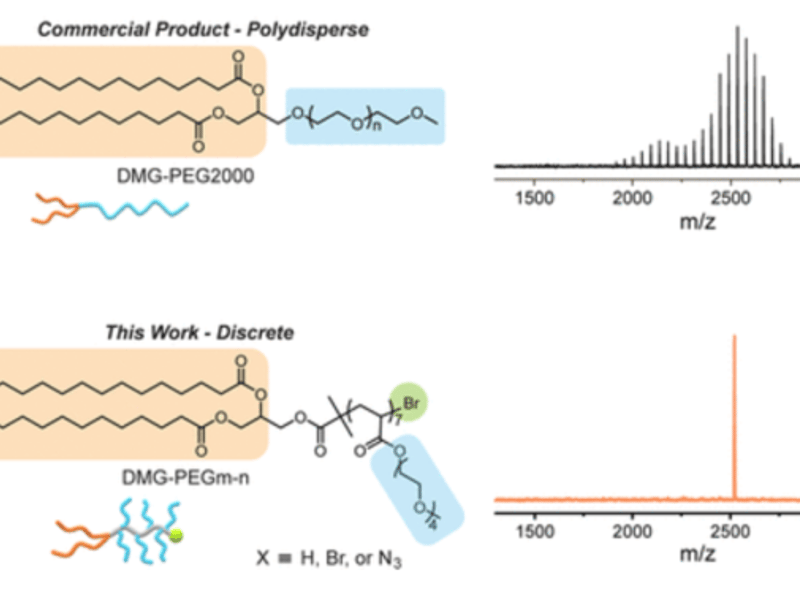
Discrete Libraries of Amphiphilic Poly(ethylene glycol) Graft Copolymers: Synthesis, Assembly, and Bioactivity
Junfeng Chen, Aoon Rizvi, Joseph P. Patterson, and Craig J. Hawker (UCSB and UCI)
Demonstration of a novel strategy for the scalable synthesis of multiple libraries of discrete lipid poly(ethylene glycol) (DMG-PEG) derivatives, with precise control over the structure and molecular weight.
Oct 3, 2022
University of California, Santa Barbara
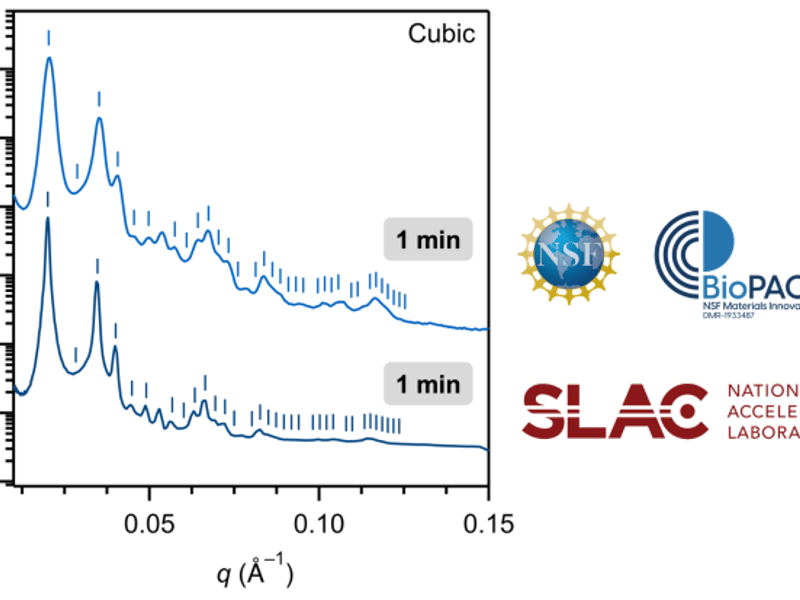
Efficient Creation and Morphological Analysis of ABC Triblock Terpolymer Libraries
Craig Hawker and Christopher Bates (UCSB)
A versatile and scalable strategy to separate parent triblock terpolymers into libraries of fractionated samples spanning a wide range of compositions was developed.
Sep 13, 2022
University of California, Santa Barbara
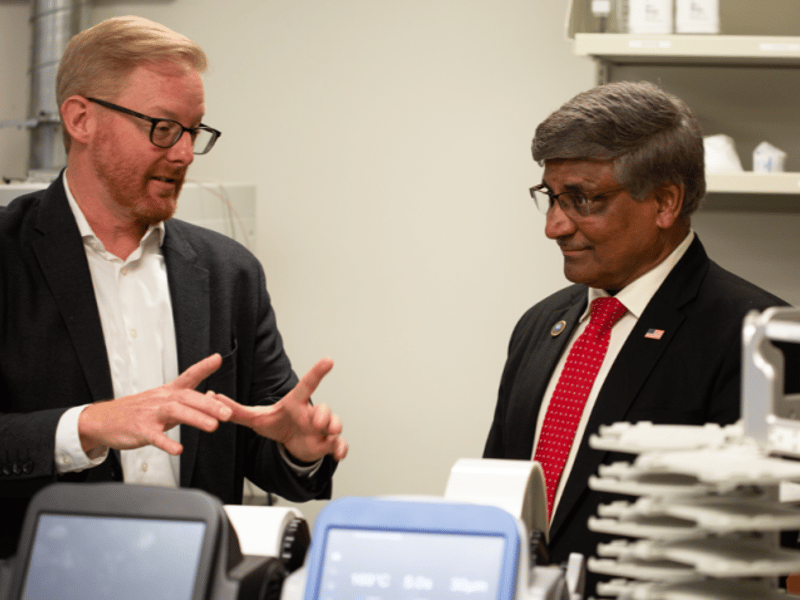
National Science Foundation Director Visits BioPACIFIC MIP Facilities
Dr. Sethuraman Panchanathan, Director of the National Science Foundation, recently visited UCLA to meet with students, faculty members, and campus leaders.
Aug 31, 2022
Cornell University
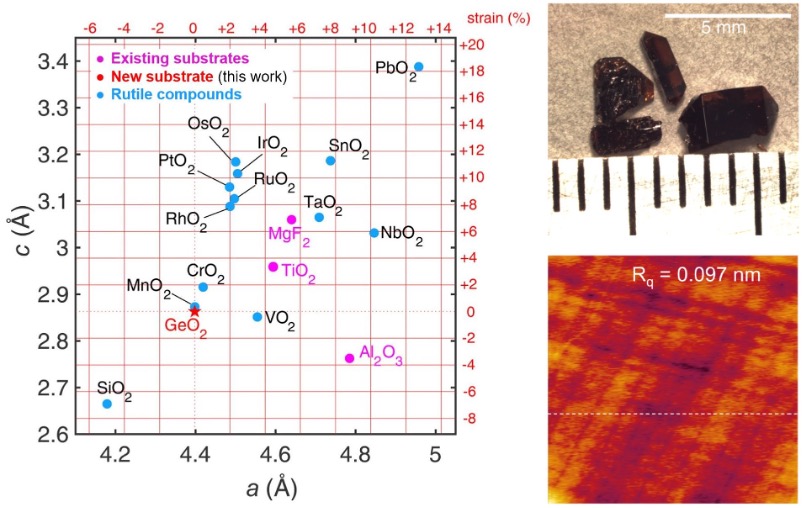
Realizing a New Rutile Substrate for Epitaxial Film Growth
J.T. Heron, E. Kioupakis and R. Hovden (University of Michigan), L.F. Kourkoutis (Cornell University). and T.M. McQueen (Johns Hopkins University)
Here, a team from the University of Michigan came to PARADIM to grow single crystals of rutile-GeO2 motivated by their recent discovery of this new semiconductor—with an ultra-high band gap (4.64 eV), high mobility, high heat conductivity, and desired dopability.
Jul 22, 2022
University of California, Santa Barbara
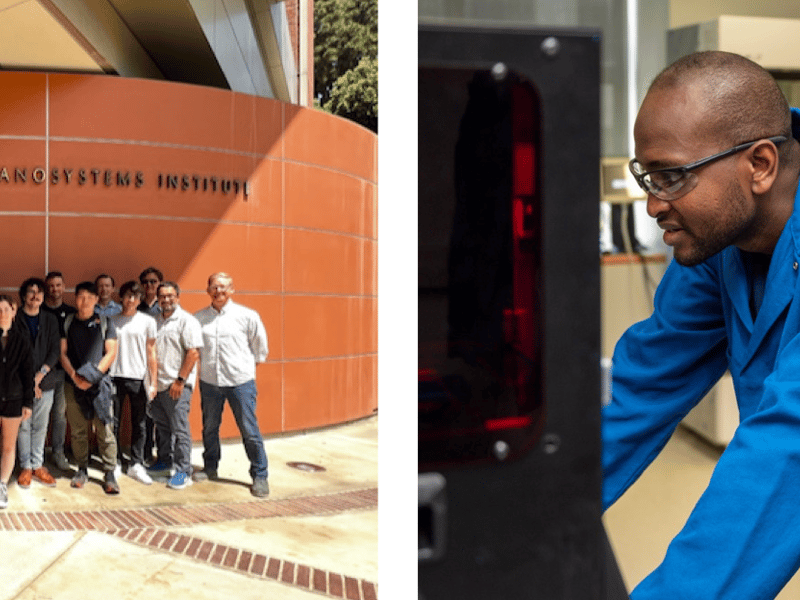
Second BioPACIFIC MIP Summer School
The second annual BioPACIFIC MIP Summer School took place in-person, July 17-22.
Jul 20, 2022
Cornell University
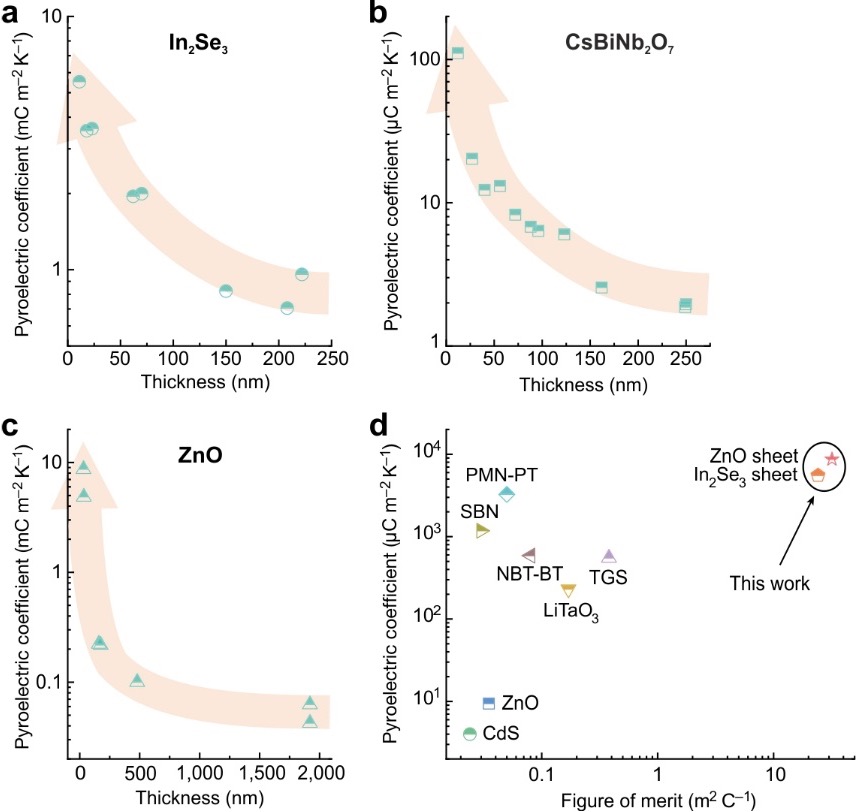
Giant Pyroelectric Effect
Jian Shi (Rensselaer Polytechnic Institute)
Here, researchers from RPI came to PARADIM to characterize three model pyroelectric materials whose bonding character varies from a van der Waals material (In2Se3), to a quasi-van der Waals material (CsBiNb2O7), to an ionic/covalent material (ZnO).
Mar 30, 2022
University of California, Santa Barbara
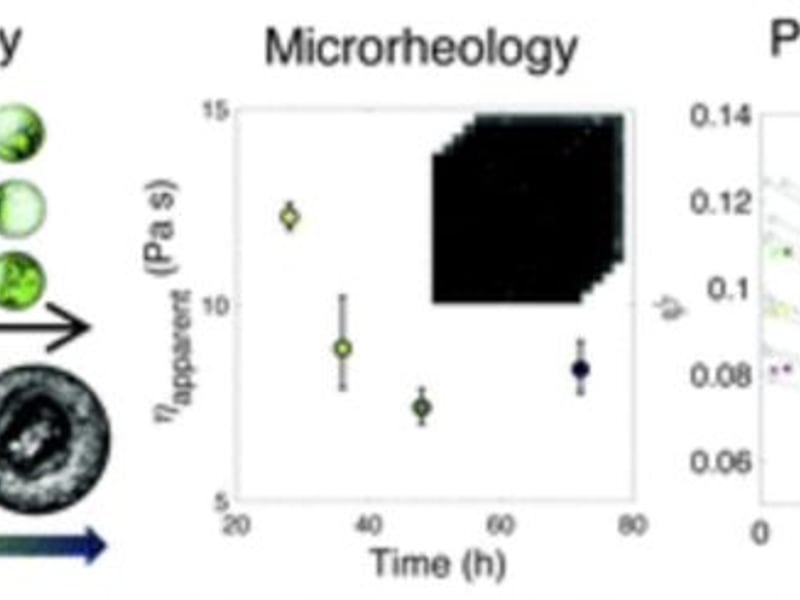
High-throughput microscopy to determine morphology, microrheology, and phase boundaries applied to phase separating coacervates
Yimin Luo, Mengyang Gu, Chelsea E. R. Edwards, Megan T. Valentine and Matthew E. Helgeson (UCSB)
A high-throughput characterization platform to achieve simultaneous, in situ mapping of time-evolving morphology and micro-rheology in phase separating complex fluids over a large compositional space.
Mar 25, 2022
Cornell University
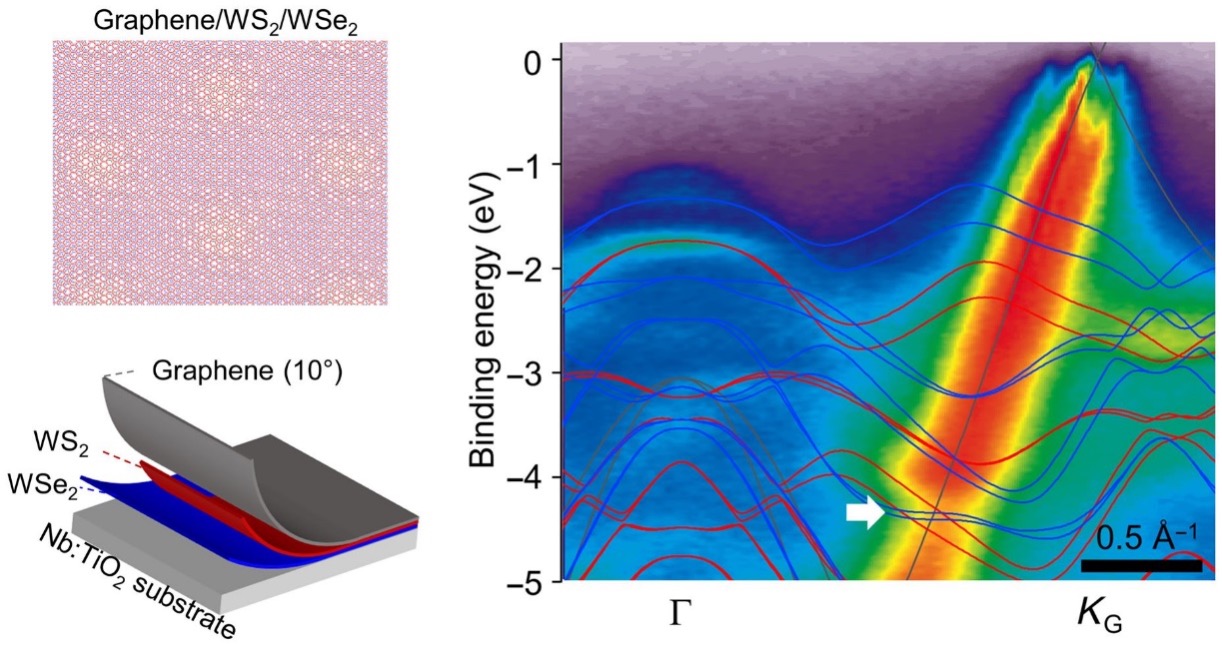
Engineering Quantum Fabrics with Arbitrary Periodicities
Kyle M. Shen,Eun-Ah Kim & Jie Shan (PARADIM), Kin Fai Mak (Cornell), Eli Rotenberg & Aaron Bostwick (Advanced Light Source)
This advance points to a new approach in engineering designer quantum fabrics with arbitrary periodicities, through the coupling of a third layer to an existing moiré heterostructure.
Showing 91 to 100 of 237