Latest News

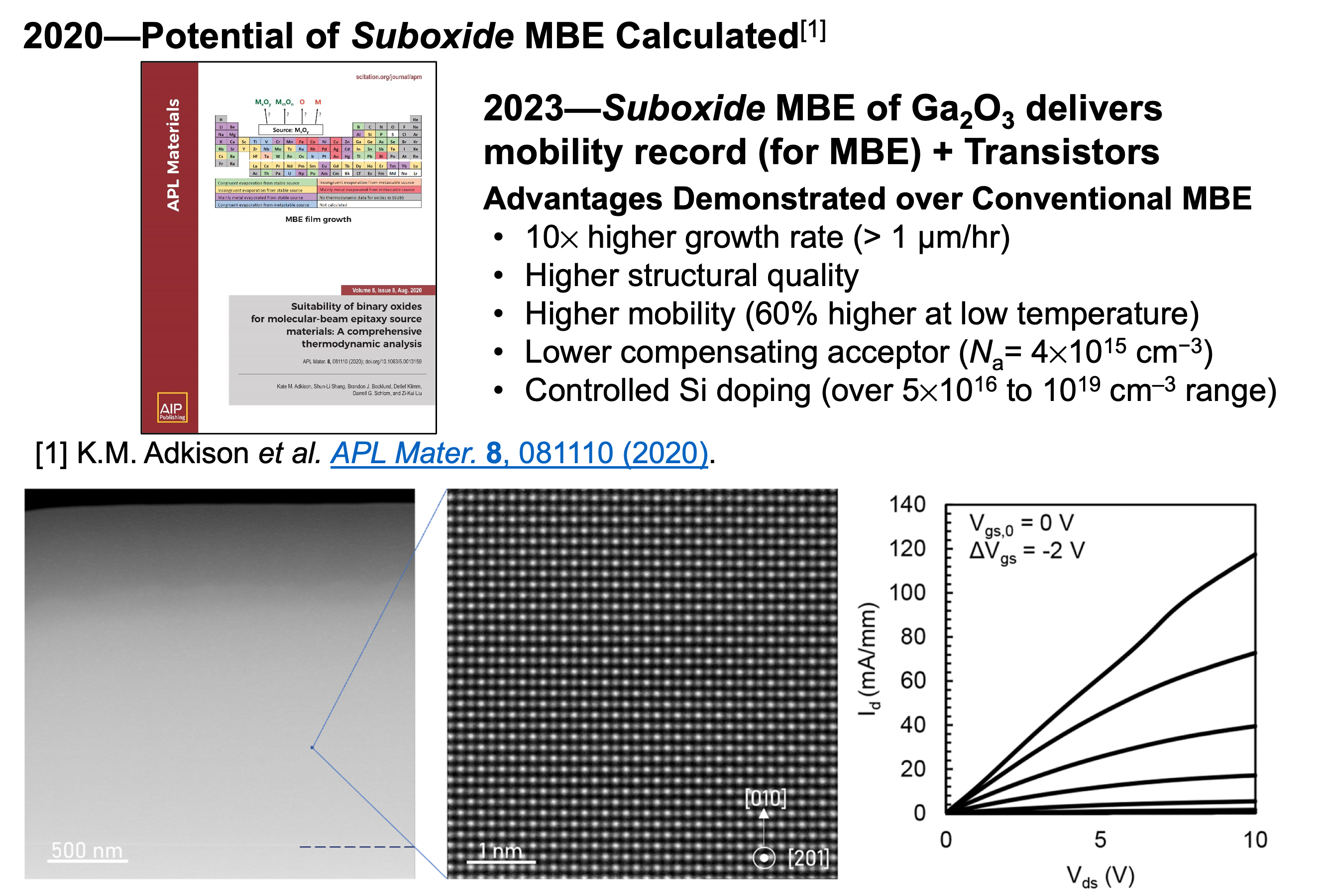
Suboxide Molecular-Beam Epitaxy—Translating a new Concept into β-Ga2O3 Transistors
Highlight · Apr 3, 2023
Cornell University

Suboxide Molecular-Beam Epitaxy—Translating a new Concept into β-Ga2O3 Transistors

D.G. Schlom, H.P. Nair, M.O. Thompson, D.A. Muller, G.H. Xing, D. Jena (Cornell University)S. Mou, A.T. Neal, K. Chabak, A.J. Green (AFRL); M.D. Williams (CAU); Z.-K. Liu (Penn State)

In 2020 PARADIM’s in-house team—working with collaborators at Penn State—developed (and patented) a new variant of molecular-beam epitaxy (MBE) called “suboxide MBE.” In contrast to conventional MBE where the molecular beams are elemental, in suboxide MBE the molecular beams are pre-oxidized. This method has since been widely applied by PARADIM users in 20 publications utilizing suboxide MBE + over 20 active user projects).
News · Mar 26, 2023
University of California, Santa Barbara

BioPACIFIC MIP Research Featured in Soft Matter Editorial Board Highlights of 2022
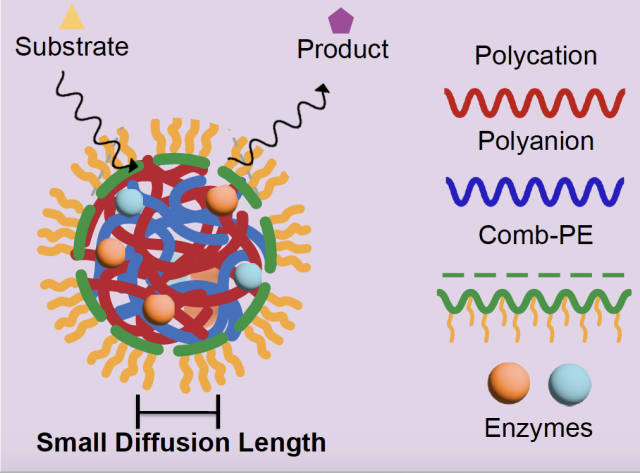
A study by Yimin Luo et al. on high-throughput microscopy for analyzing coacervates was highlighted in the Soft Matter journal. It demonstrated a new platform for simultaneous measurement of morphology and microrheology in phase-separating fluids, improving efficiency in tracking material properties during compositional changes.
Enzyme catalysis in a synthetic protocell Courtesy of BioPacific News
News · Mar 21, 2023
University of California, Santa Barbara

Advait Holkar receives the APS Emerging Soft Matter Excellence (ESME) award
Advait Holkar, a UCLA PhD student, received the ESME award for his research on protocells that enhance enzymatic catalysis. His work shows that these protocells achieve significantly faster reaction rates and improved efficiency in enzyme cascade reactions, conducted at the Living BioFoundry and supported by BioPACIFIC MIP.
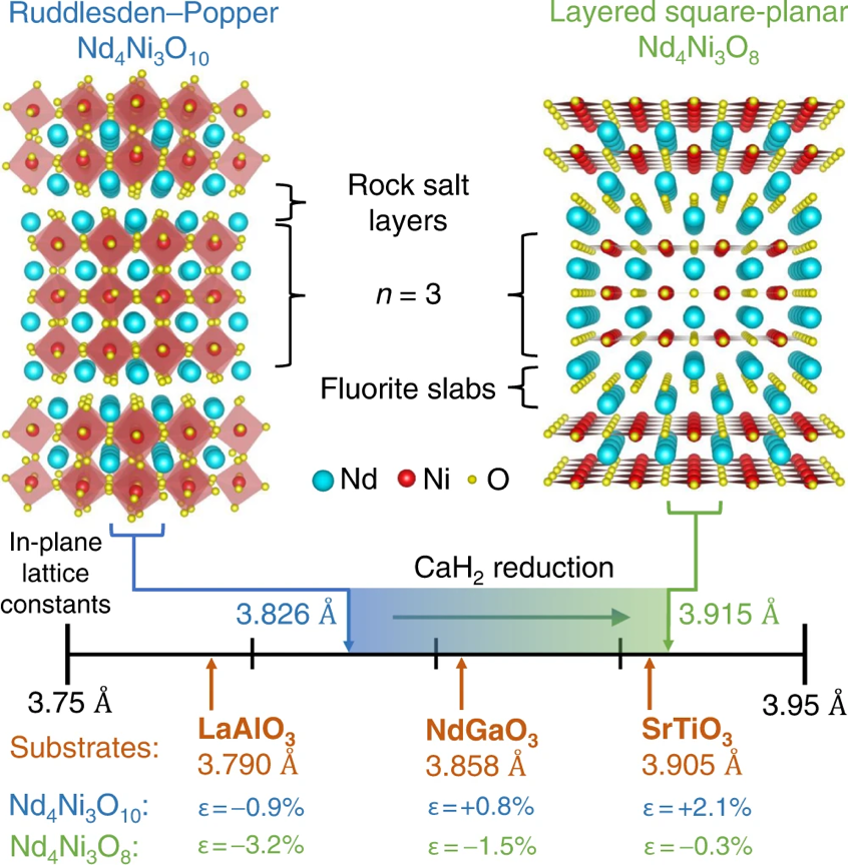
Figure 1: The nickelate superconductor Nd4Ni3O8 is metastable and synthesized by removing oxygen from the stable parent phase Nd4Ni3O10 at low temperature, where kinetics prevents decomposition. The number line shows the lattice parameters of Nd4Ni3O10, Nd4Ni3O8, and the substrates upon which Nd4Ni3O10 can be grown. Strain arises from growth as well as the Nd4Ni3O10 → Nd4Ni3O8 transformation. The mismatch between Nd4Ni3O10, Nd4Ni3O8, and the substrates are shown.
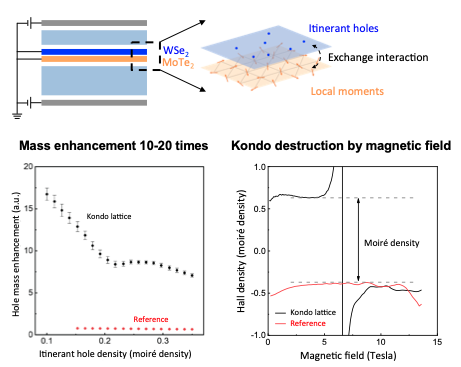
Gate-tunable heavy fermions in a moiré Kondo lattice
Highlight · Mar 15, 2023
Cornell University

Gate-tunable heavy fermions in a moiré Kondo lattice

Kin Fai Mak and Jie Shan (Cornell University)
Here, members of PARADIM’s In-House Research Team demonstrate a model system created by stacking a pair of monolayer semiconductors, providing a simpler way to study confounding quantum behavior, from heavy fermions to exotic quantum phase transitions.
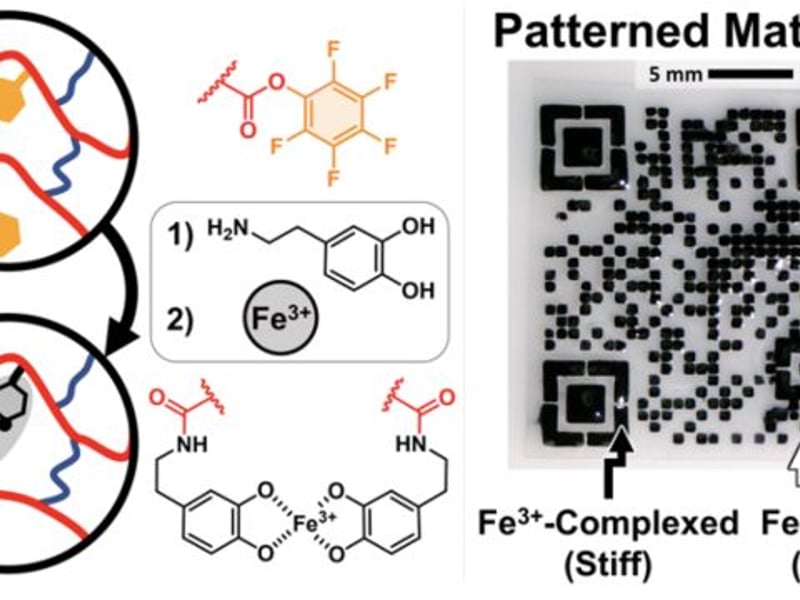
(Left) Cartoon overview of polymer network design via active ester chemistry to form networks with mixed iron-catechol and covalent crosslinking. (Right) Demonstration of high resolution patterned materials with specific hard (iron-complexed) and soft (iron-free) domains. The QR code is a link to the publication.
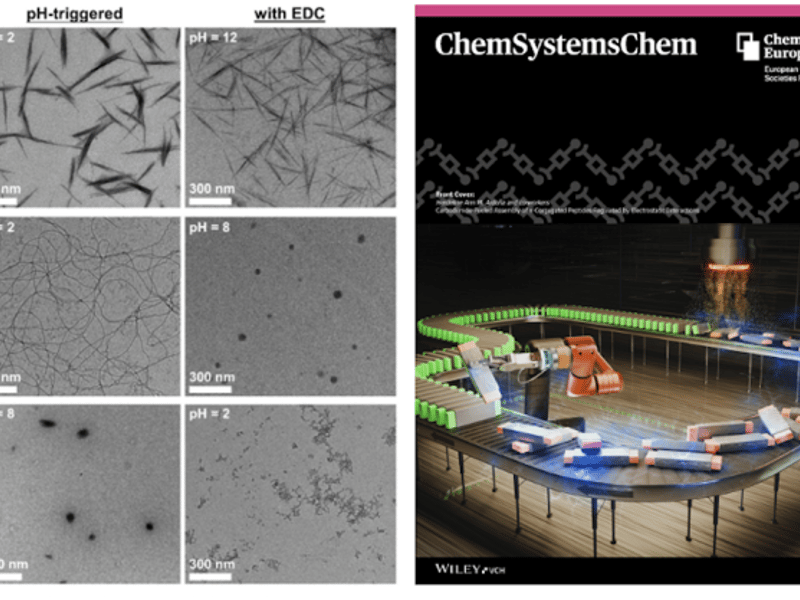
Left: A fuel-driven assembly and disassembly of semiconducting peptides show morphologies that are sequence-dependent and distinct from pH-driven assemblies; Right: Featured cover article in ChemSystemsChem Journal. Article also selected for the Systems Chemistry in the USA special collection and Chemistry Europe Editor’s Choice: Spotlights
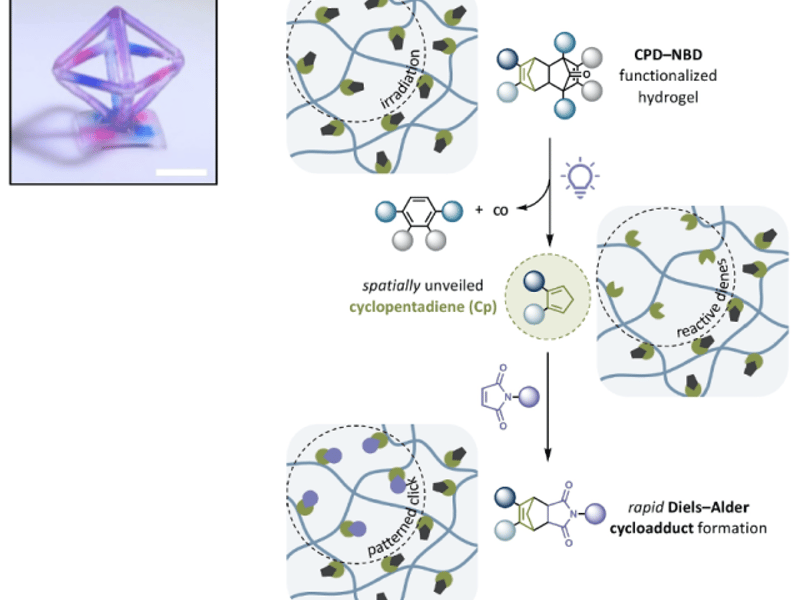
Upper left: Hydrogel 3D printed octahedron after patterning with CPD-NBD adducts. Scale bar: 5mm; Right: Schematic of hydrogel photopatterning mechanism with  CPD-NBD adducts.
Courtesy of 2DCC News
News · Feb 23, 2023
Pennsylvania State University

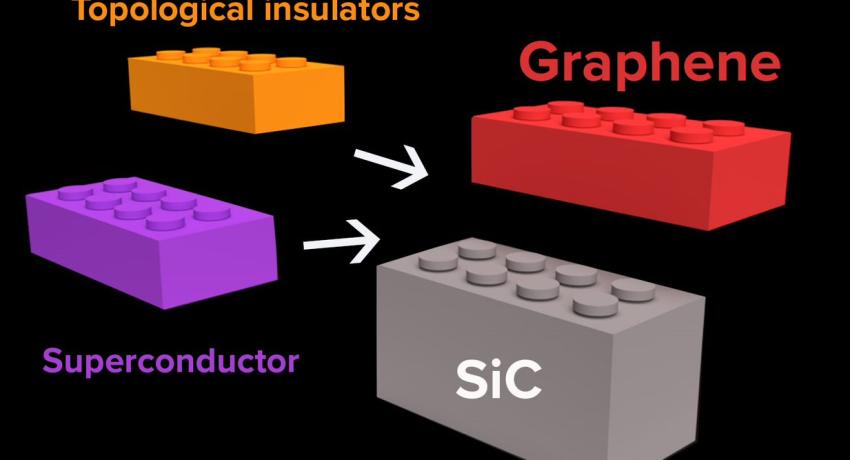
New material may offer key to solving quantum computing issue
Researchers at Penn State have developed a new heterostructure of two-dimensional materials that could advance quantum computing by overcoming significant barriers. This involves using topological superconductors to enhance qubit stability. Their innovative synthesis technique may facilitate scalable production for future quantum applications, marking a step toward practical topological quantum computers.
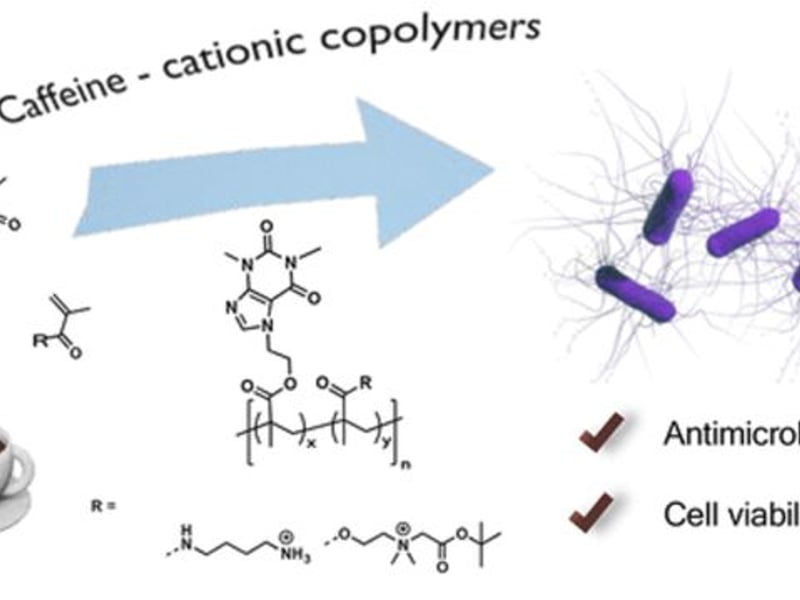
Preparation of caffeine–cationic copolymers displaying antibacterial properties and low cell viability in fibroblasts.