
A team of University of Wisconsin-Madison engineers has received nearly $25 million from the U.S. National Science Foundation for an initiative that leverages AI to accelerate discovery and development of “super” materials that can withstand a proverbial perfect storm of extreme conditions.
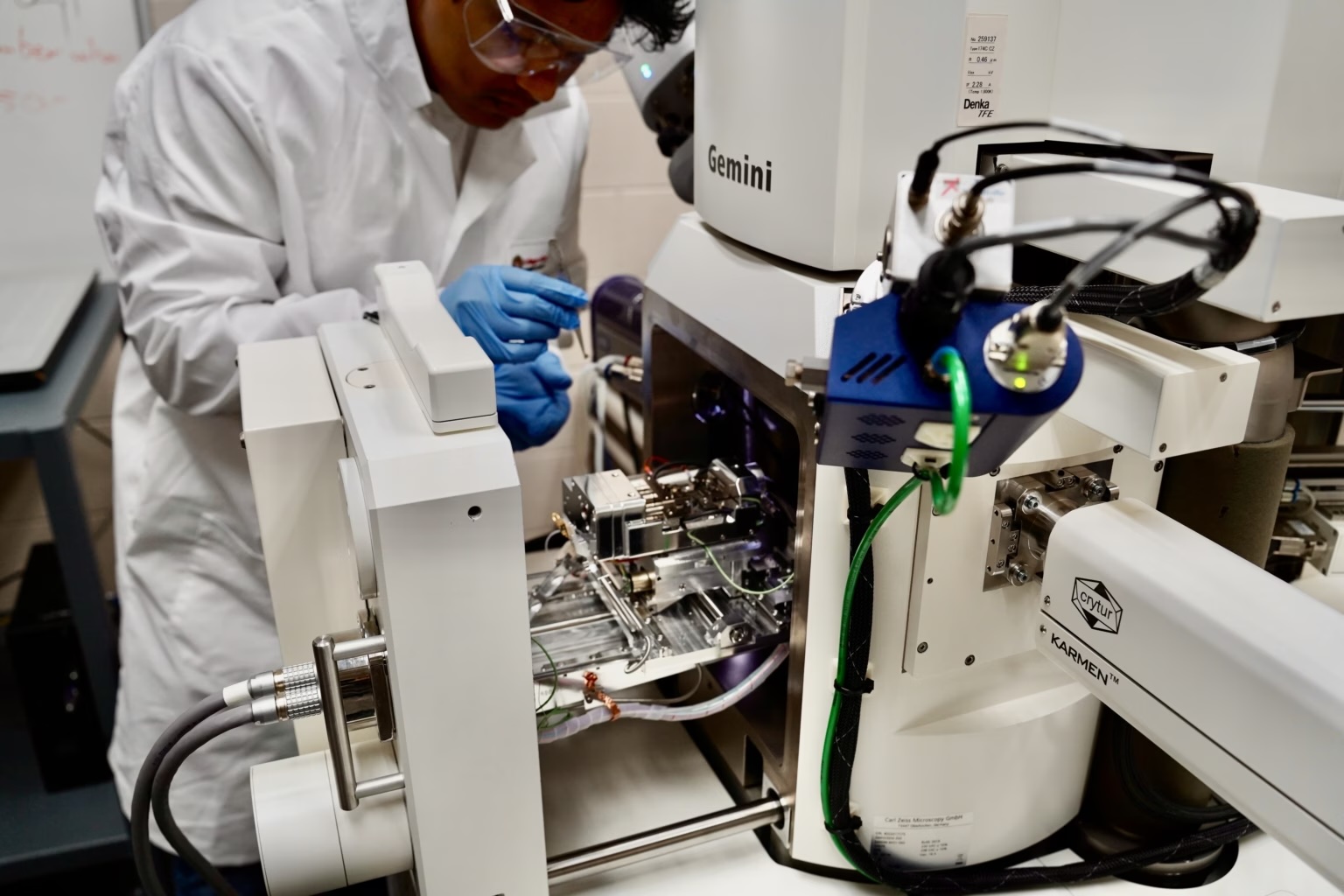
The funding creates the NSF Materials AI and Transformation through Research Infrastructure for eXtreme environments Materials Innovation Platform (NSF MATRIX-MIP) as a national hub that expands capacity for materials innovation. As part of the NSF MATRIX-MIP, the UW-Madison College of Engineering will launch a major new user facility, the Hard Materials Lab.
Supported by the NSF Directorate for Mathematical and Physical Sciences, NSF Materials Innovation Platforms respond to the national need for user facilities that enable complex materials research, close collaboration of interdisciplinary and transdisciplinary teams, and access to cutting edge tools. UW-Madison is one of two universities to receive funding in 2026 to create a new NSF Materials Innovation Platform.
“The NSF Materials Innovation Platforms serve a broad national need as user facilities that provide access to some of the best equipment and expertise for materials science research,” says NSF Mathematical and Physical Sciences Directorate Head Tie Luo. “NSF wants researchers with great ideas, wherever they are in the U.S., to get their hands on this equipment and work together to pursue those ideas.”
Materials AI and Transformation through Research Infrastructure for eXtreme environments Materials Innovation Platform (MATRIX-MIP)
MATRIX-MIP is an NSF-funded Materials Innovation Platform at the University of Wisconsin-Madison that provides open access to advanced tools and expertise for discovering and developing materials that can operate in extreme environments, such as very high temperatures, mechanical stress, corrosion, and radiation. Working with Argonne National Laboratory, the platform brings together materials synthesis, manufacturing, characterization, testing, modeling, and artificial intelligence in a single user-centered platform, anchored by the new Hard Materials Lab.