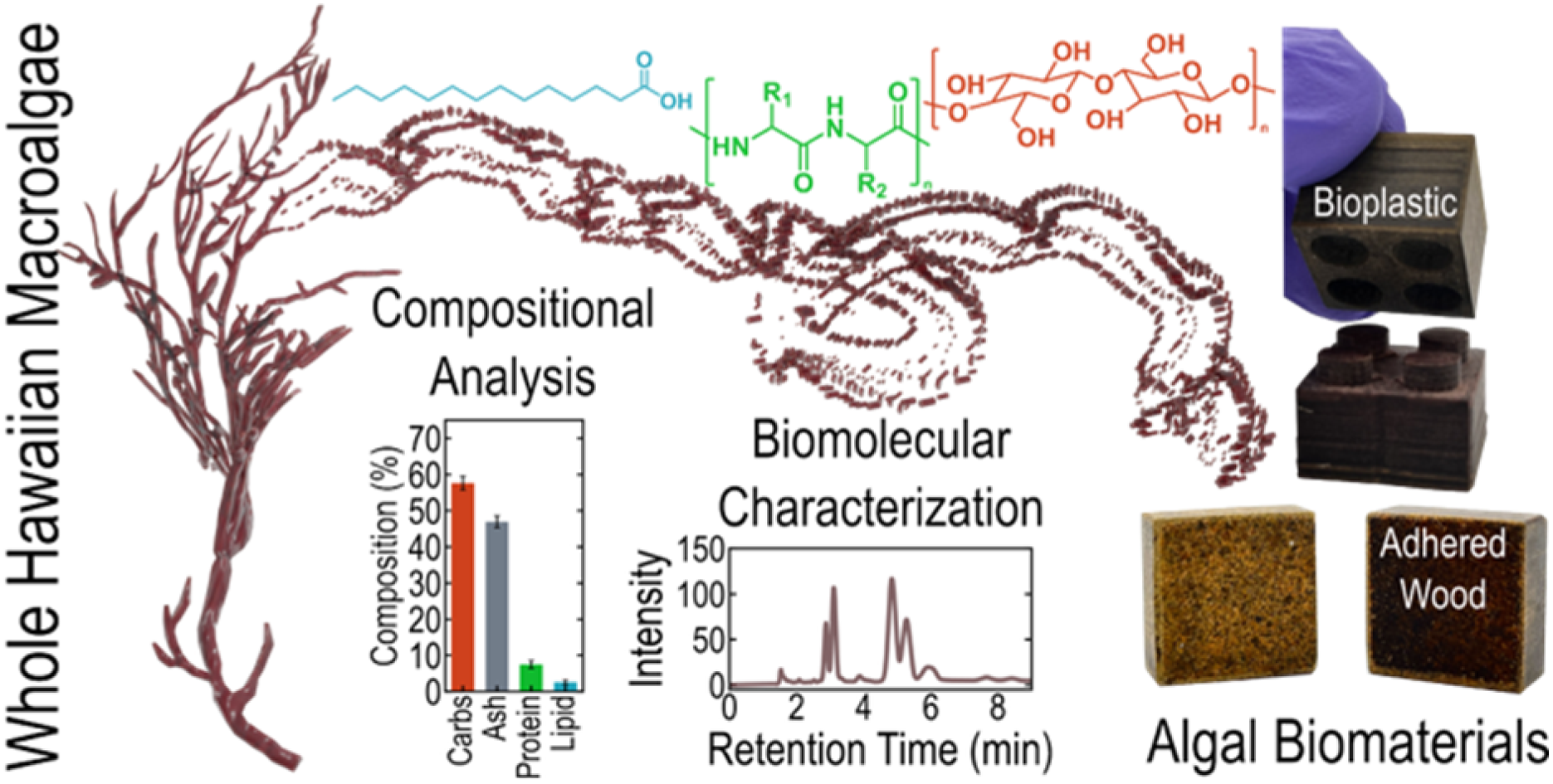
A team of GlycoMIP researchers and collaborators has demonstrated how four species of native Hawaiian seaweed can be used to produce bioplastics and adhesives for wood particleboards, offering a potential alternative to petroleum-based materials. By applying heat and pressure, the researchers transformed whole seaweed into solid materials without the need for chemical extraction or pretreatment. They also analyzed the carbohydrates, proteins, fats and other components of each species to understand how differences in their composition affected the strength and performance of the resulting materials.
The findings highlight seaweed's potential as a renewable resource for producing more sustainable everyday materials. Bioplastics made from red seaweed were stronger and stiffer than those made from green seaweed, while adding seaweed to wood particleboards significantly improved their strength and stiffness. The seaweed-bonded boards also extinguished themselves within approximately 10 seconds when exposed to flames, unlike the untreated wood control, which burned completely. Because seaweed grows rapidly and does not require farmland, the study points to opportunities for developing materials that reduce reliance on petroleum-based products. The detailed analysis of the four species also provides a foundation for future research into seaweed-based materials.
GlycoMIP
GlycoMIP is an NSF-funded national user facility and multidisciplinary research program that addresses scientific and technological bottlenecks in glycomaterials research. A partnership between Virginia Tech, the University of Georgia, Brandeis University, and Rensselaer Polytechnic Institute, GlycoMIP accelerates glycomaterials discovery and development through leading-edge research and a state-of-the-art user facility.